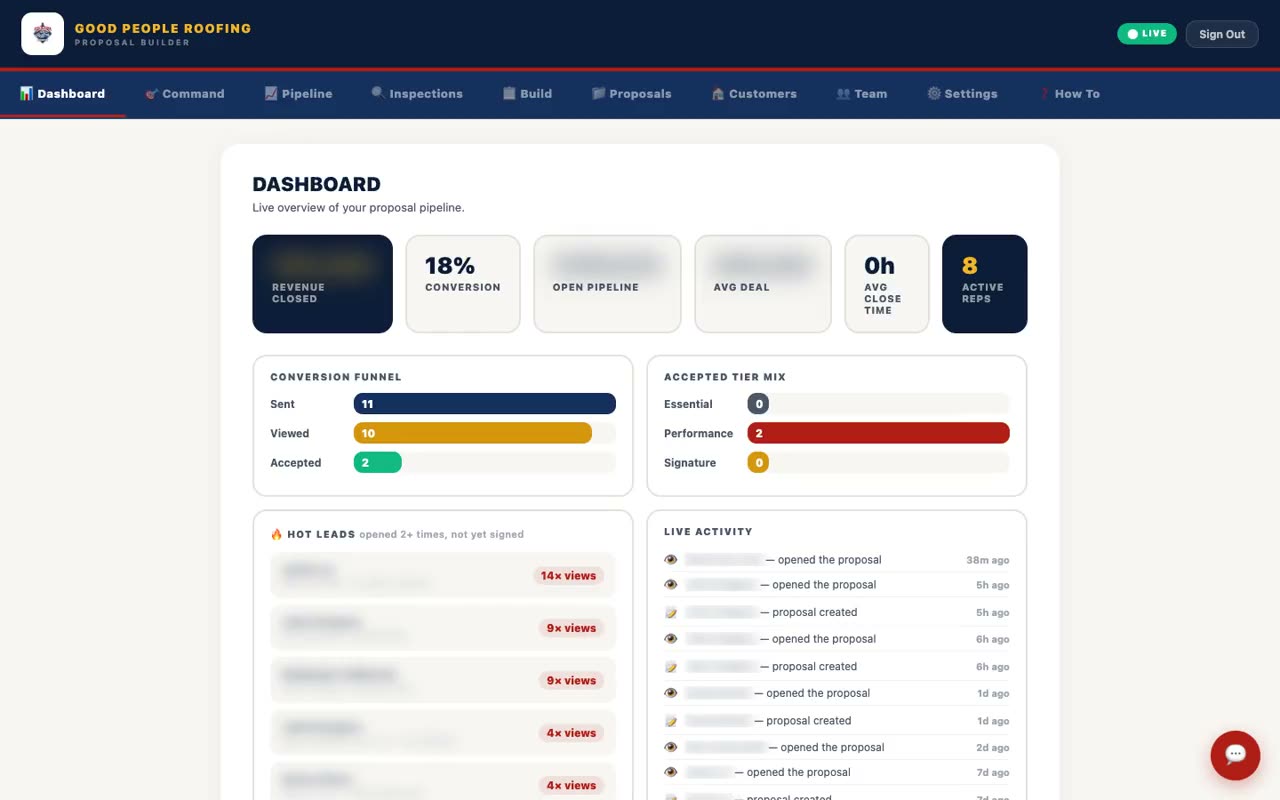
Chained no-code steps are useful for the clean case and brittle everywhere else, which is unfortunate because the clean case was never the expensive part. The cost in a manual process sits in the exceptions: the lead with a missing address, the approval that needs a second opinion, the customer who replies to the wrong thread, the proposal that gets viewed three times but never signed. A zap encountering any of those either fails silently or does something confidently wrong. Both outcomes are worse than the manual step it replaced, because at least the human noticed the exception. Real process automation has to treat exceptions as expected states, not as weird failures outside the diagram.
The mechanism we build is a process state machine. The work is not just a row in a spreadsheet or a task in someone's inbox; it has a known state, a set of allowed next states, the data required to move, and a record of who or what moved it. That is the difference between an automation and a pile of triggers. In the Good People Roofing build, a new lead can arrive from ads or the site, pre-fill the builder through a CRM webhook, move into roof measurement, become an inspection, generate a proposal, enter viewed or accepted states, and trigger follow-up only while it remains unsigned. The software knows where the work is. That is why the next action can be automatic without being reckless.
Once software acts on your behalf, the question stops being whether it ran and becomes who authorised it, what input it used, and whether the team can prove what happened. A process that sends a customer message, advances a sale, changes a price, moves money, or updates a record needs to leave evidence. This matters commercially before it matters legally. When a proposal was edited, a customer was nudged, or a rep overrode a recommendation, the owner should not reconstruct the answer from memory. The system should show the event trail. Automation with an audit trail is operational infrastructure. Automation without one is a future argument.
Framing automation as headcount reduction usually produces the wrong build, because it optimizes the tasks people perform instead of the gaps between them. Most delay in a real process is waiting: a lead waiting for a rep to notice it, a proposal waiting for a follow-up, a status waiting for someone to update the CRM, a manager waiting for someone to pull the report. Automating the handoff compresses elapsed time far more than shaving seconds off an individual task. The point is not to remove the rep from the sale; it is to make sure the rep starts with the address already filled, the roof ready to measure, the proposal tracked, and the next follow-up queued when the homeowner goes quiet.
The best process automation is not fully autonomous in the theatrical sense. It is opinionated and interruptible. It moves the work forward when the rules are clear, asks for a decision when the rules are not, and records the reason when a human overrides it. Good People Roofing is a useful example because the system does not pretend every roof sale is identical. It can trace a roof from an address, support a structured site inspection, build a tiered proposal, track opens, and nudge unsigned deals. But a rep can still adjust the roof, edit the proposal, and work the homeowner relationship. The automation removes drift and delay, not judgement.
Most teams think they have a follow-up problem because a person forgot to call. Usually they have a process-state problem. The system does not know the proposal was viewed, or knows it was viewed but does not know whether it is signed, or knows both but has no rule for what should happen next. That is why follow-up becomes a sticky note, a CRM task, or a guilty feeling at the end of the day. In the roofing build, unsigned proposals can be nudged for a defined window and stop when the homeowner signs. That matters because the automation is tied to the proposal state, not to a calendar reminder that keeps firing after reality has changed.