Can the storefront and warehouse use the same inventory count?
Yes. The implementation should define one authoritative stock record and check availability when an order reserves inventory. Delayed synchronization between independent counters can create overselling risk; the demo should test concurrent orders and stock release after cancellation.
How does the system handle kits and single-unit products?
Both reserve from the same underlying inventory. If a kit consumes ten units, its availability is calculated from that requirement rather than maintained as an unrelated stock number.
Can it connect to a fulfillment partner or supplier feed?
Yes. Supplier availability can be ingested on a schedule and fulfillment orders can be handed to a partner queue, with tracking pulled back. The exact integration and fallback rules are configured during implementation.
Does it buy shipping labels?
It can. Carrier services, rates, label purchase and tracking can sit directly on the order so the team does not retype shipment data into a separate system.
Is this generic warehouse software?
No. It is a hybrid product built around peptide and research-supply operations. The reusable foundation covers inventory, orders and fulfillment; warehouse states, carrier rules, supplier flows and notifications are configured around the company.
How do we move peptide inventory from spreadsheets or an existing store?
Start by reconciling product identifiers, units, lot references, available stock and open orders. Agree which system owns each field and how to handle duplicates or missing records. Test a limited import and compare the resulting balances before a production cutover. Migration effort and rollback requirements are part of the implementation scope, not an assumed one-click import.
What should a peptide inventory management demo show?
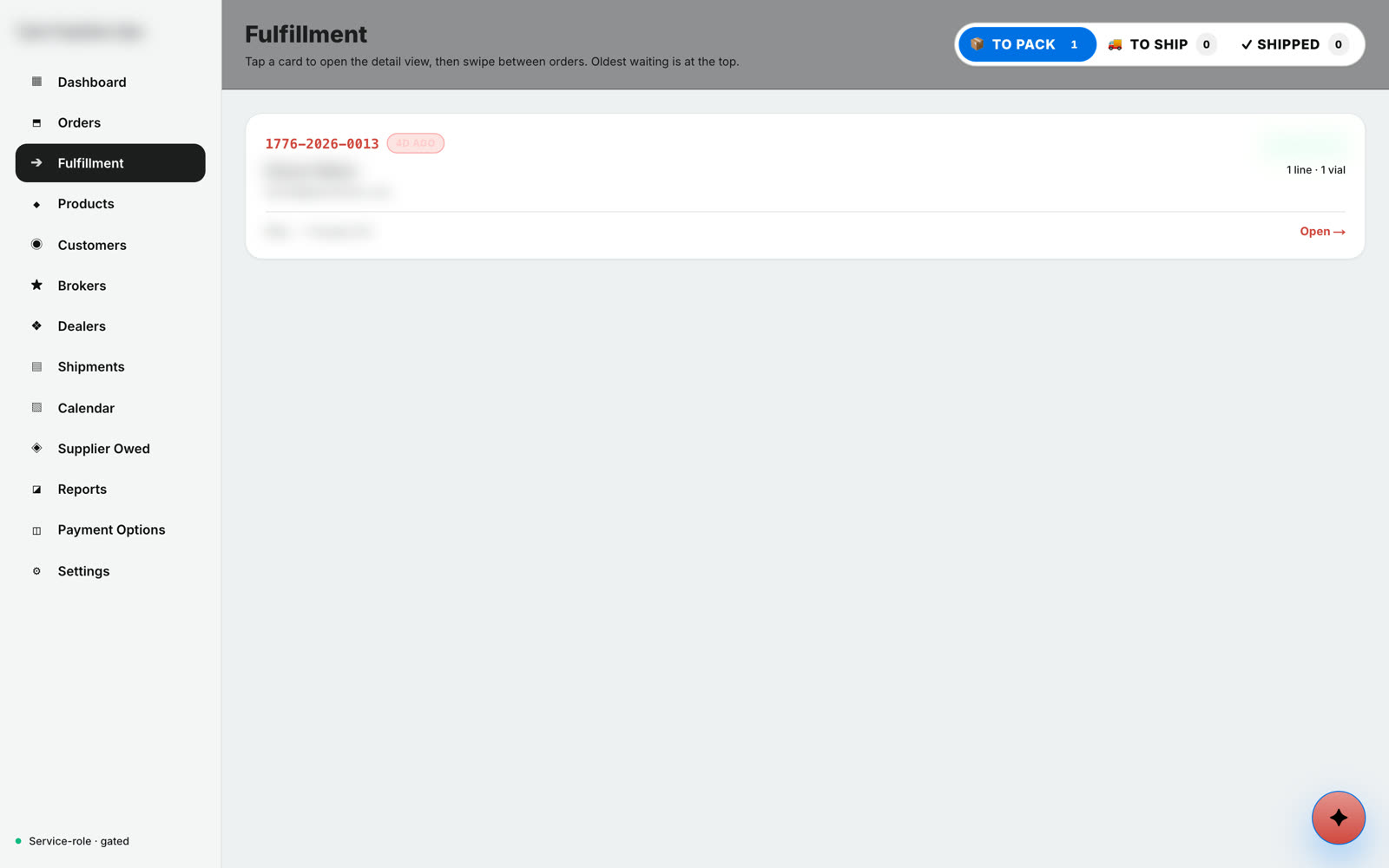
Ask to follow a representative order from available stock through reservation, picking and shipment, including its lot reference. Then test a cancellation, a shortage and an unavailable supplier feed. Agree the expected stock changes and who resolves exceptions. A screenshot of a fulfillment queue alone does not verify those paths for your configuration.
Should we replace our warehouse system or connect it?
Keep an existing warehouse system when it already handles the required stock and fulfillment rules. Scope a connection only after checking its supported APIs, identifiers and update behavior. Custom software is worth evaluating when important lot, ordering or exception workflows remain manual; it does not require replacing every tool.