Card to carrier,
one system.
1776 Peptides, built end to end and still growing — an American-made research-supply brand with a live-inventory storefront, card checkout on the page with Apple Pay and Google Pay, a veterans program that verifies itself, broker and affiliate pricing, and an operator platform that buys the UPS label and tells the customer from one queue.
Real product · catalog, pricing and customer detail blurred
"What's actually in stock?" A payment link sent by hand. Labels typed one at a time.
Then the system started doing it.
One brand,
every page.
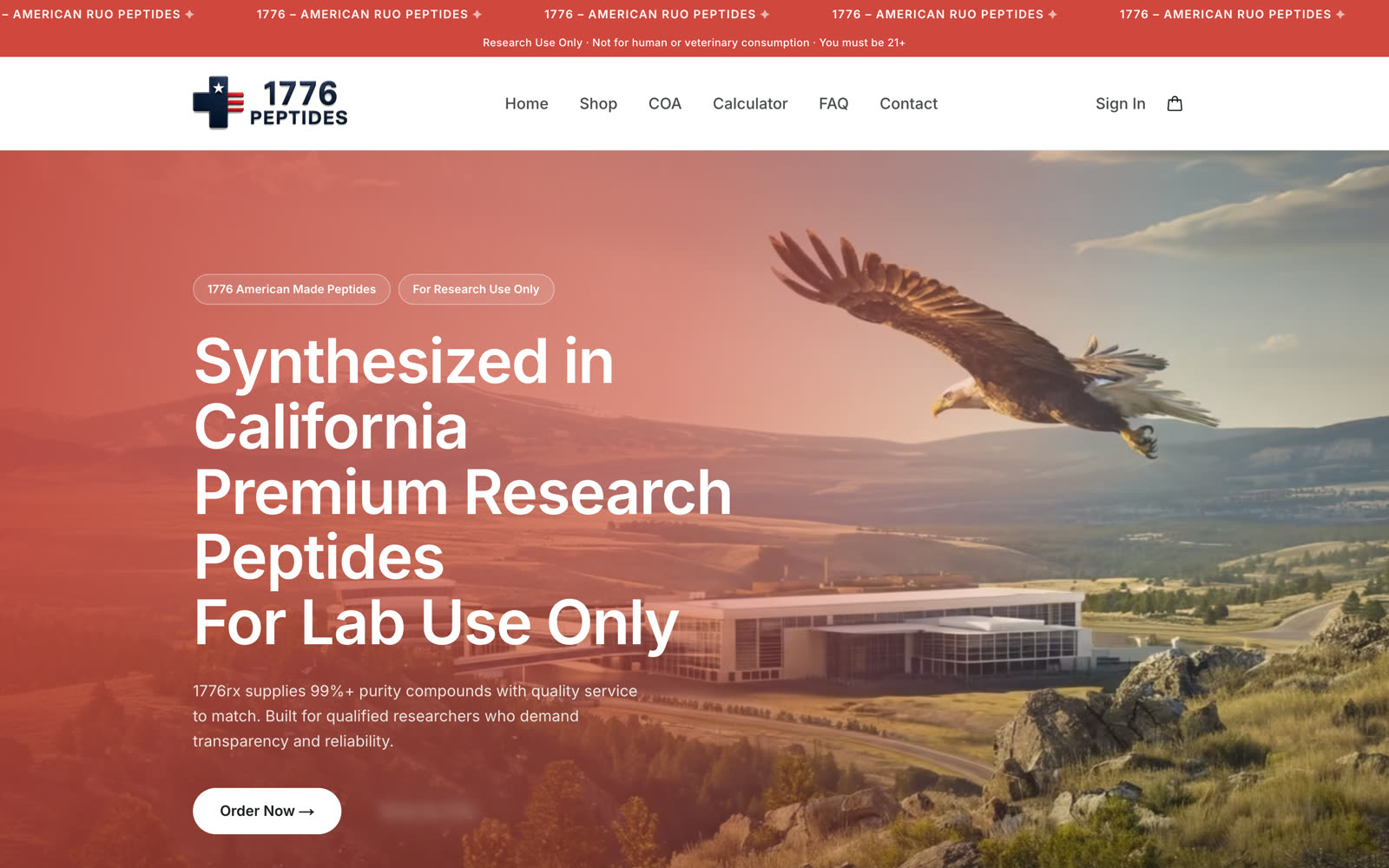
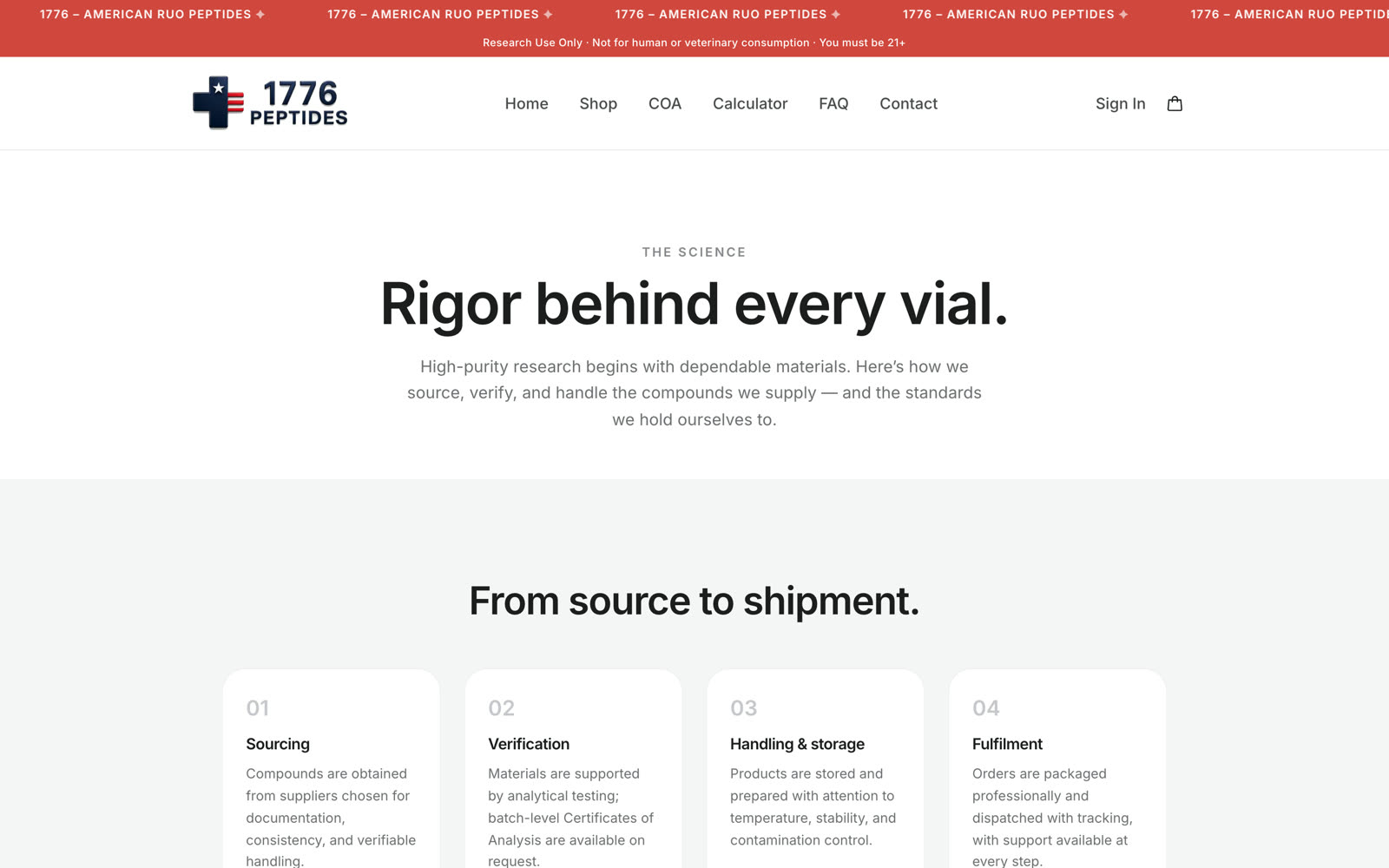
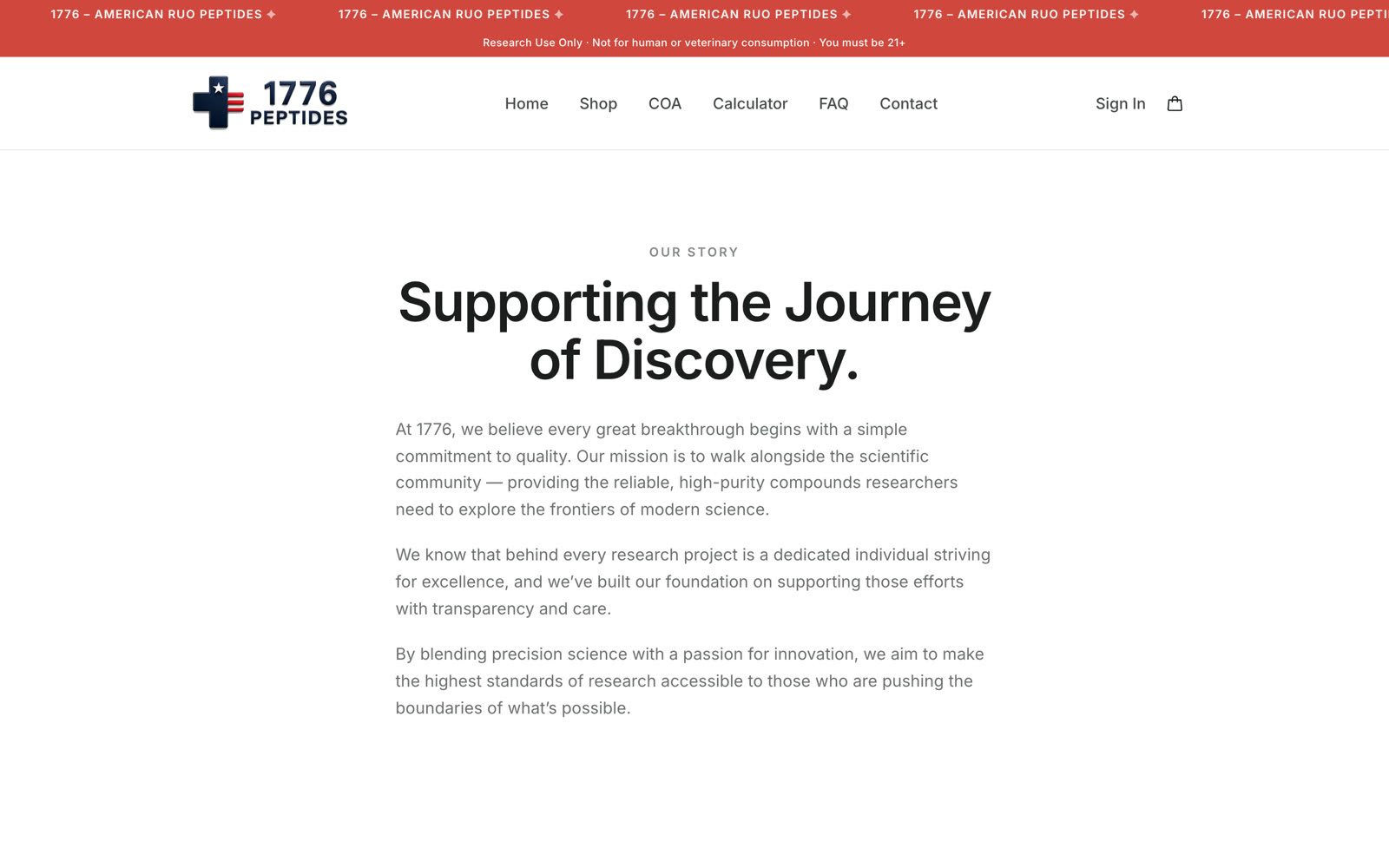
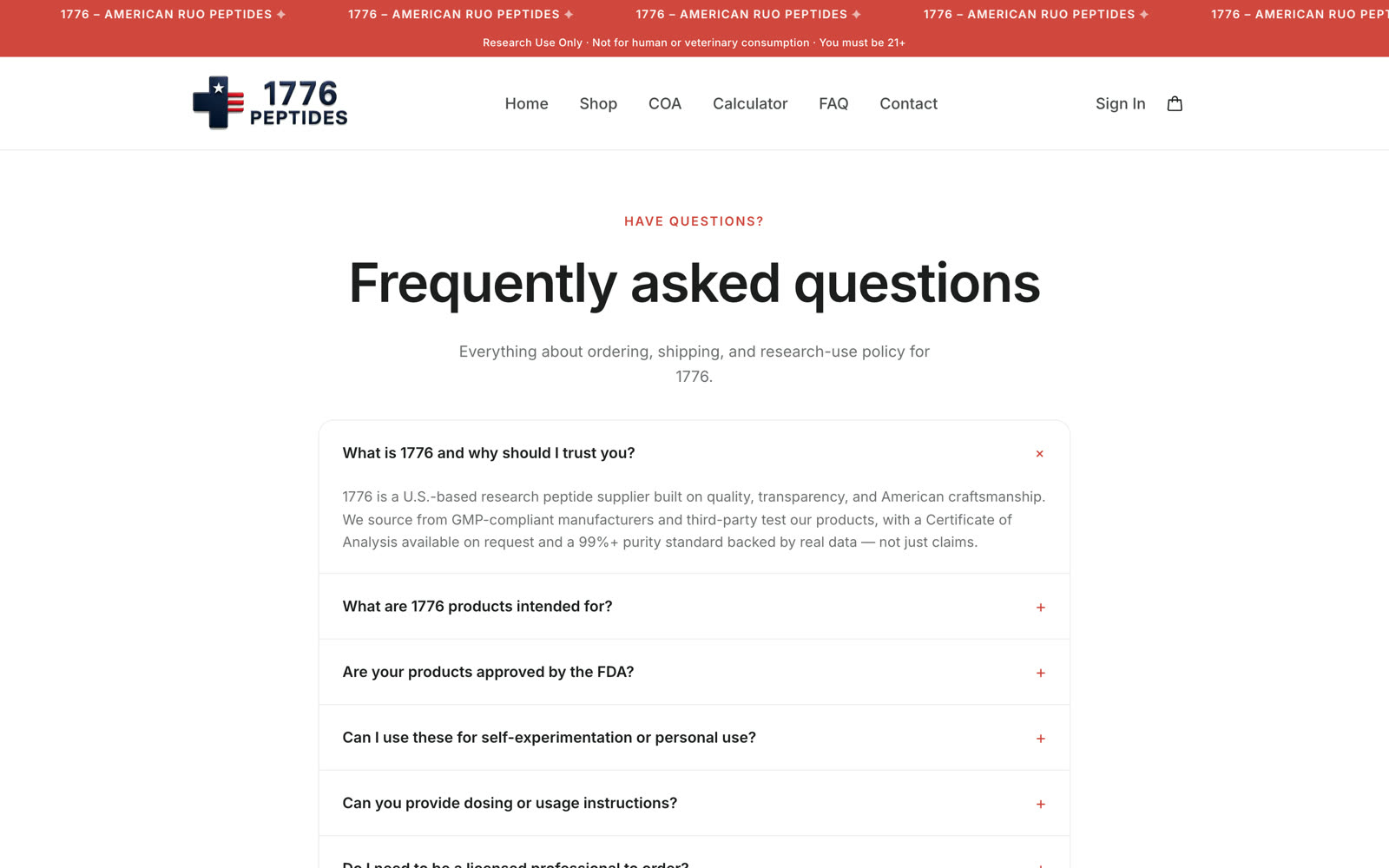
We designed the full web presence — the home page, the standards behind every vial, the brand story, a questions page that does real work, and a contact route. One voice across the whole site, with the research-use terms carried on every screen rather than buried in a footer.
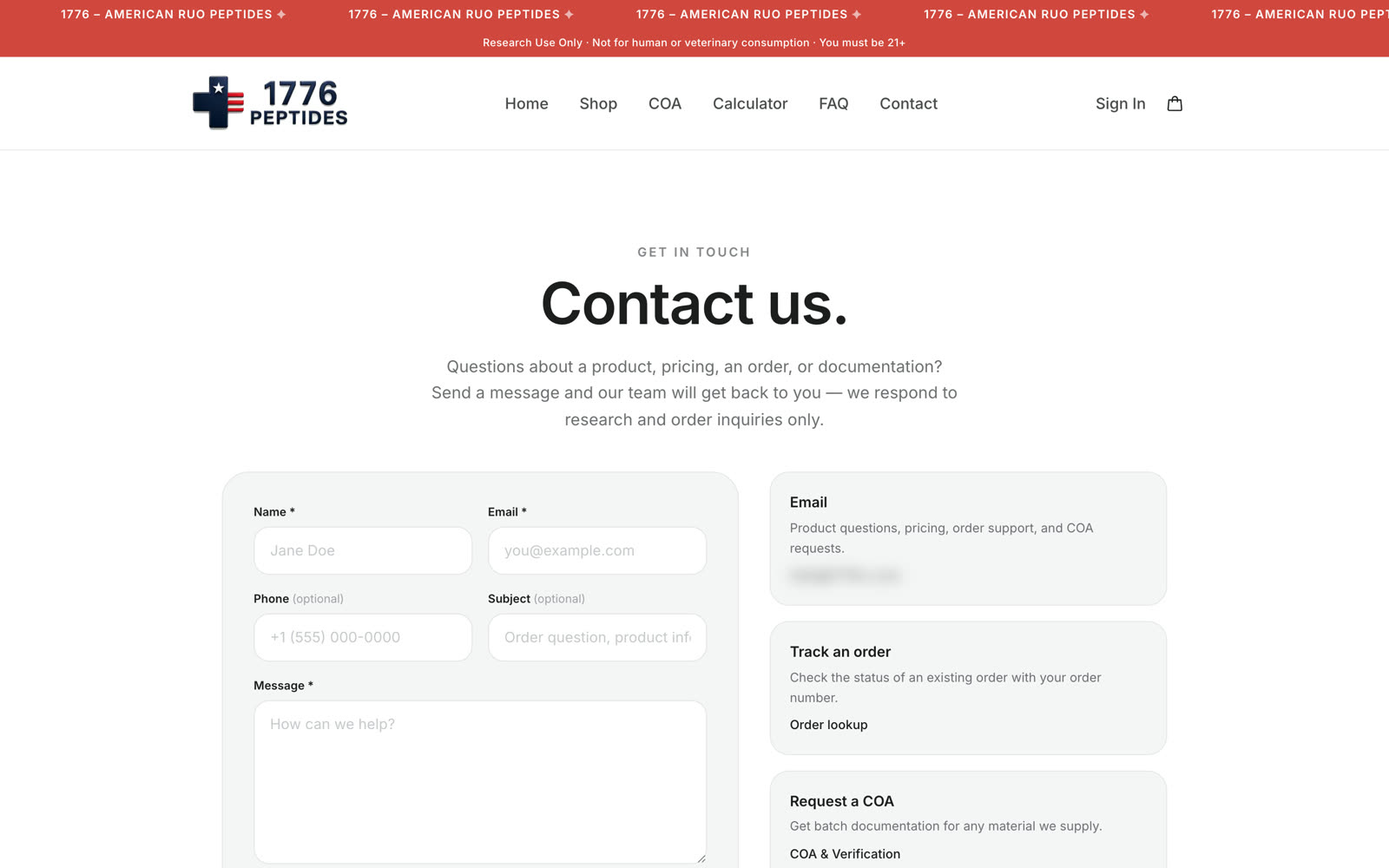
A catalog you
can actually browse.
Everything on one page, searchable and grouped by category, with each strength its own card and each item carrying its own documentation. Stock ribbons come from the warehouse count, so a buyer never configures an order that cannot be filled. A signed-in broker sees their price beside retail; everyone else sees the public one.
Was an order assembled over messages → now a real storefrontWhat's in stock,
right now.
A public inventory page reading the same counts the warehouse works from, updating every minute. Buyers see what is available and what is running low before they order, so the order that arrives is one that can actually be filled.
Was "let me check and get back to you" → now a live page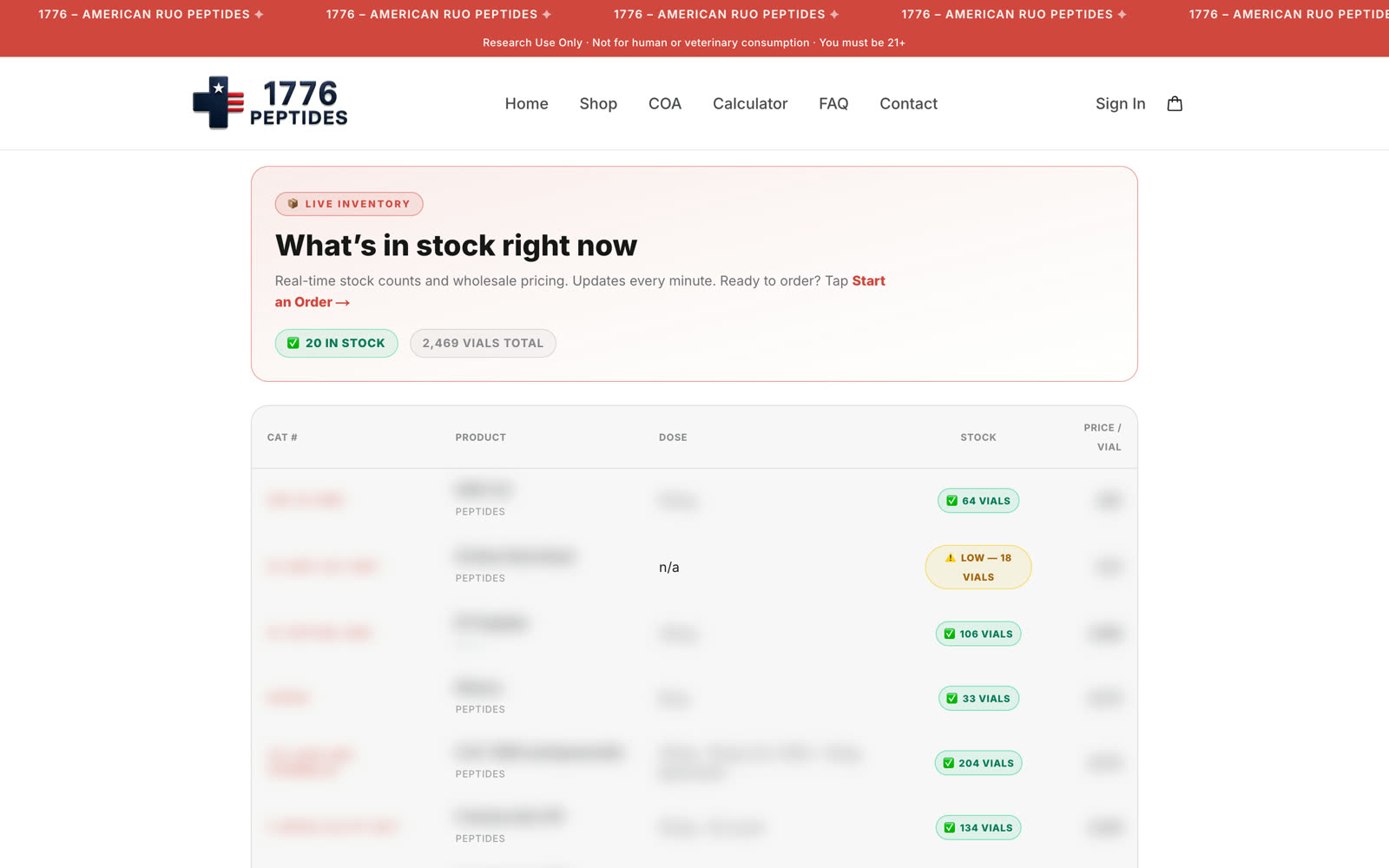
Pay on the page,
card in hand.
Card fields live on the checkout itself, with Apple Pay and Google Pay beside them. The address autocompletes from a verified source so a label never bounces, a sale or promo code applies itself, and package protection is one optional tick. Every path was reviewed adversarially before launch: an order cannot be charged twice, an unpaid one hands its stock back after thirty minutes, and a buyer who walks away at the card step gets a single reminder.
Was a payment link sent by hand → now card, wallet, done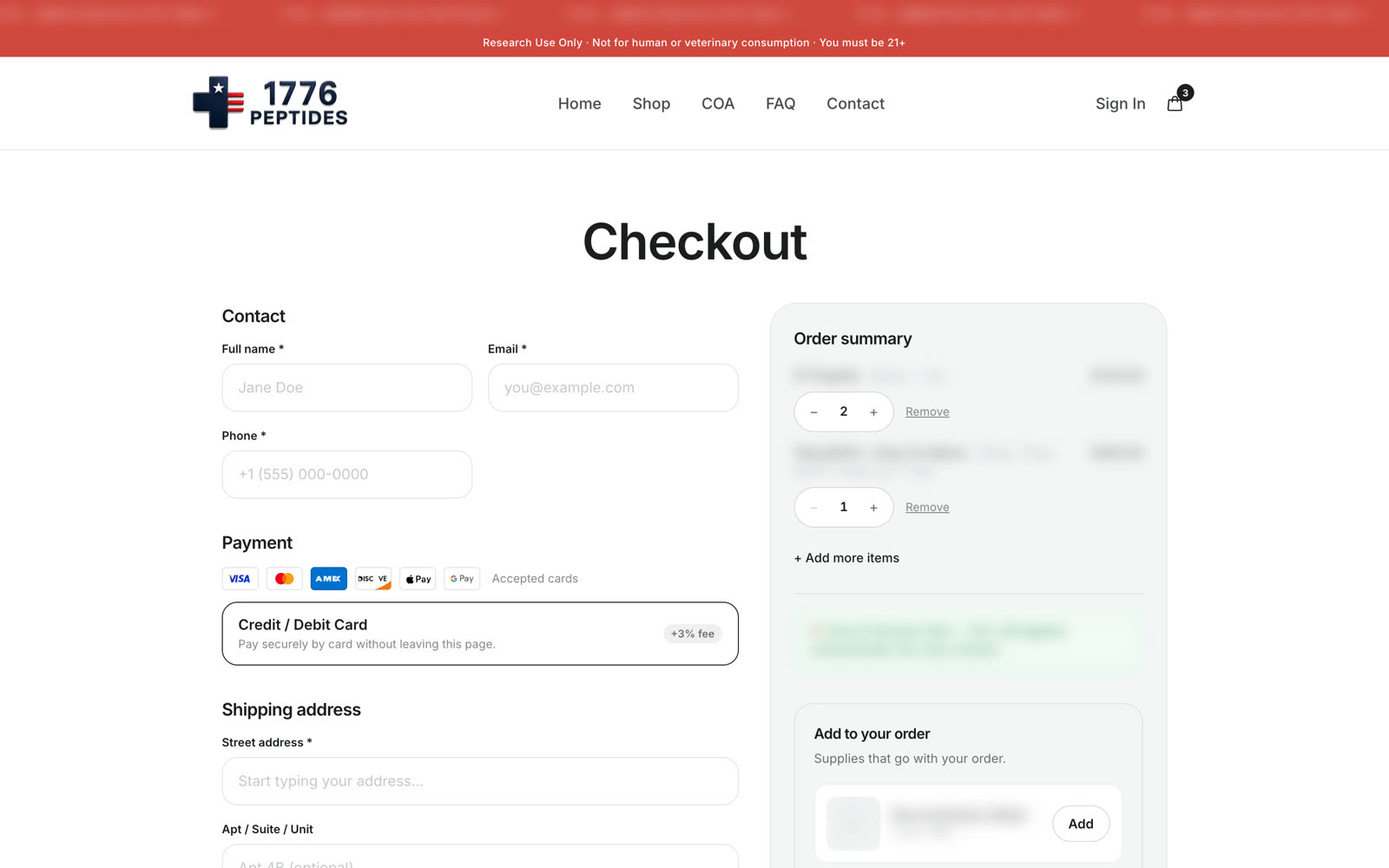
A discount that
verifies itself.
US veterans get twenty percent off for life. They apply once with a photo of their service document; a vision model checks that it is a real US service record and that the name matches, and a clear case gets its personal code on screen and by email within the minute. Anything less certain waits for a human in the review queue. The code rides the normal checkout, so nothing else had to change.
Was a promise on a banner → now a program that runs itself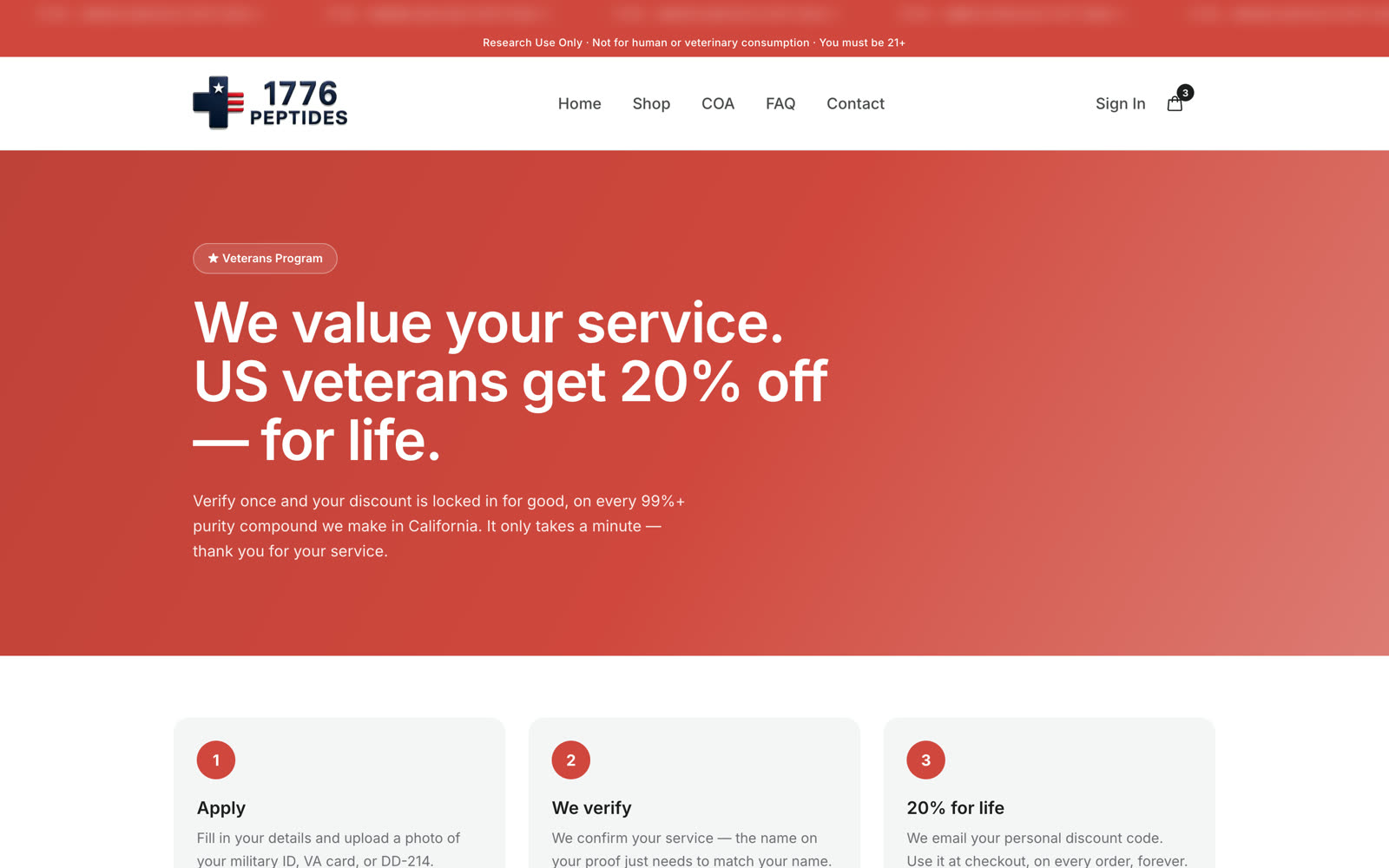
Customers track
themselves.
An order number and the email it was placed with is all it takes. Buyers look up their own status and tracking whenever they want, and every step — payment received, packed, shipped with a tracking number — arrives by email and text without anyone writing a message.
Was answering status messages all day → now self-serve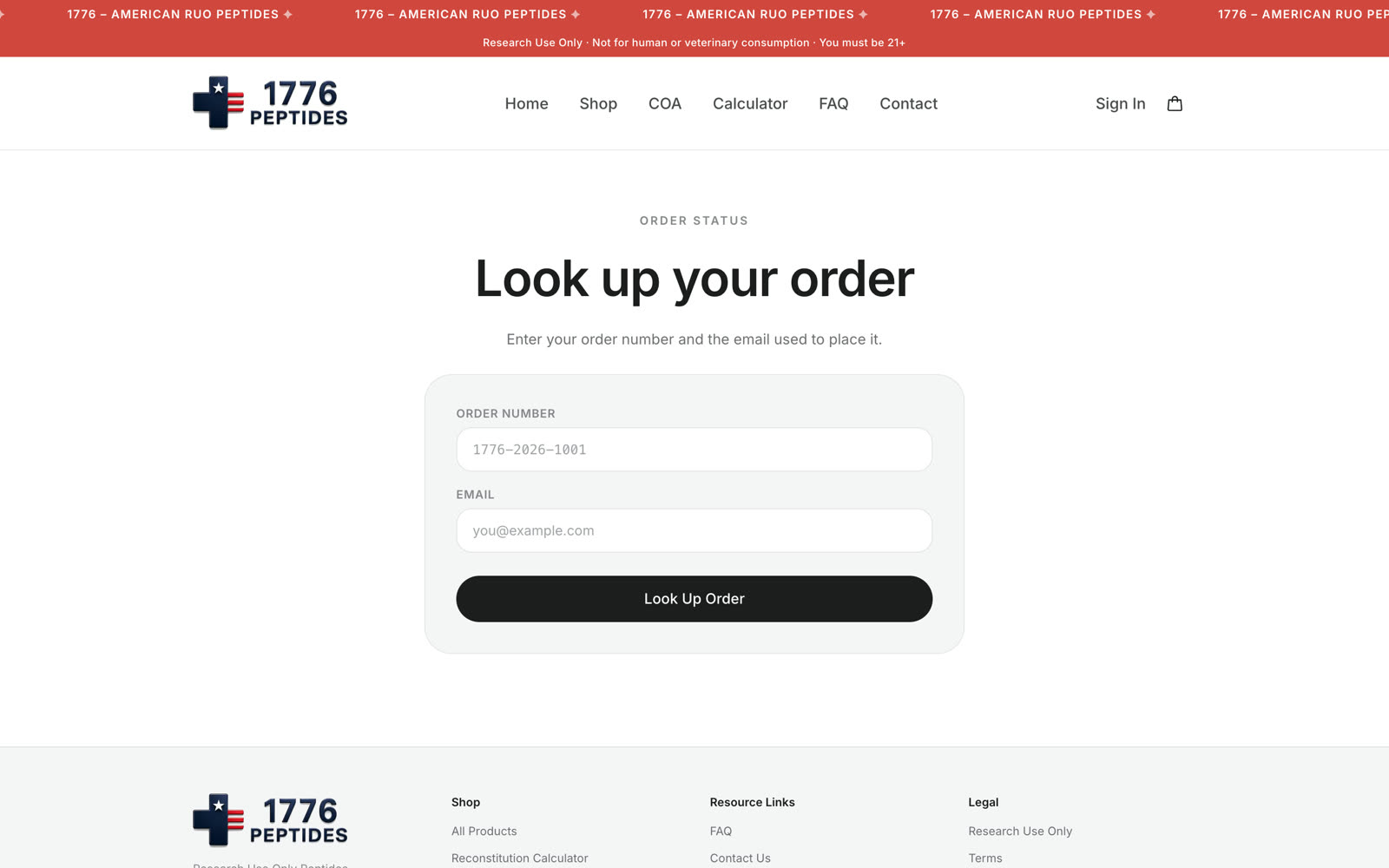
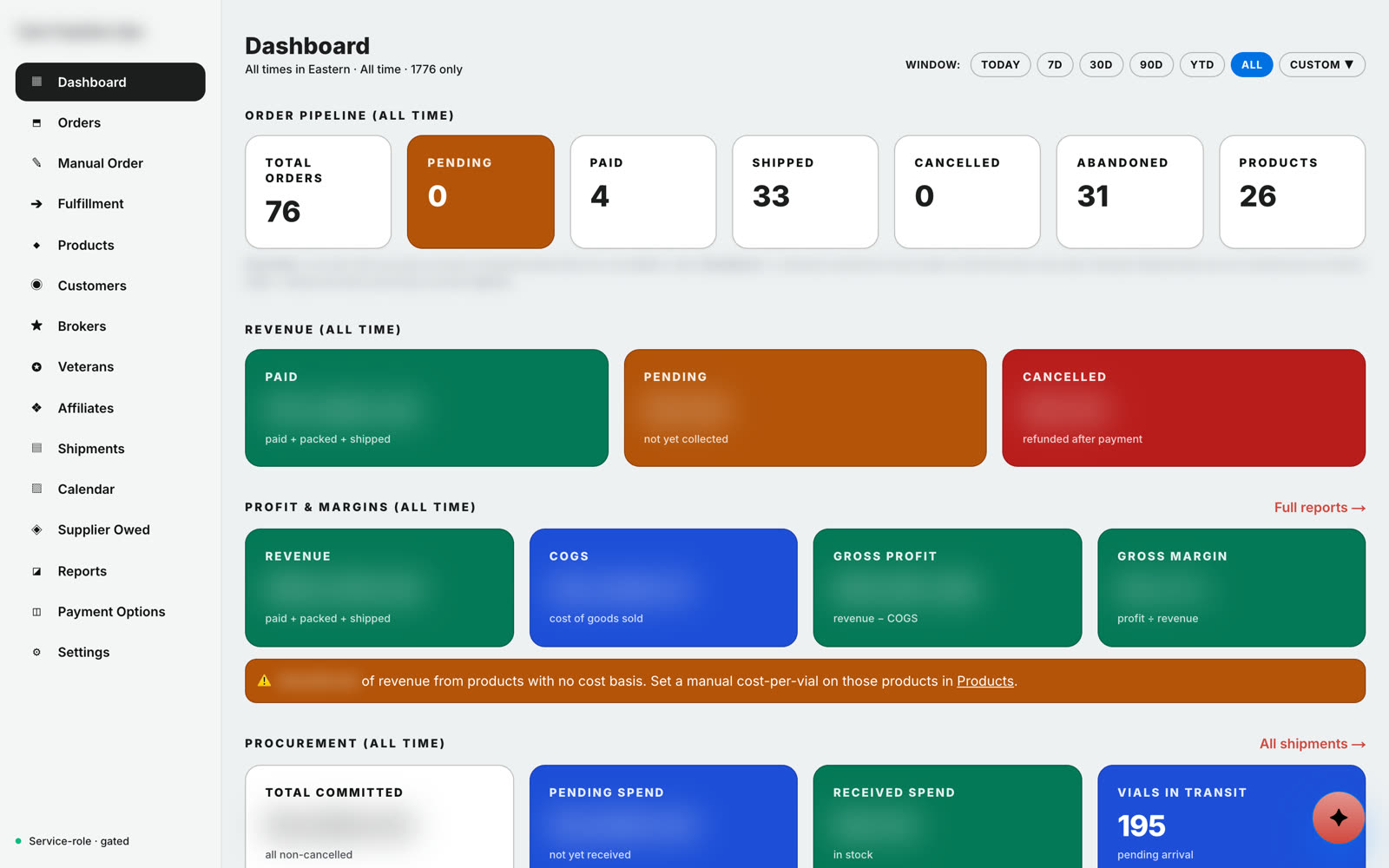
The counts, the charges and
the labels all live here.
The storefront is the front of house. Behind it runs the operator platform — a dashboard that separates real cancellations from abandoned checkouts, the product and stock console, the order pipeline with refunds that move money through the gateway, and a fulfillment queue that buys the label. The numbers customers see are the numbers the operation runs on, which is the only way they stay true.
One console for
product and stock.
Every item with its stock on hand, what is in transit, and what lands next — sorted so the ones about to run out surface first. Three price lists per product, retail, broker and broker-plus, edited by the owner's team without a developer. Bulk edits keep a whole catalog current in one pass, and a hidden product simply has no page.
Was a spreadsheet nobody trusted → now one live console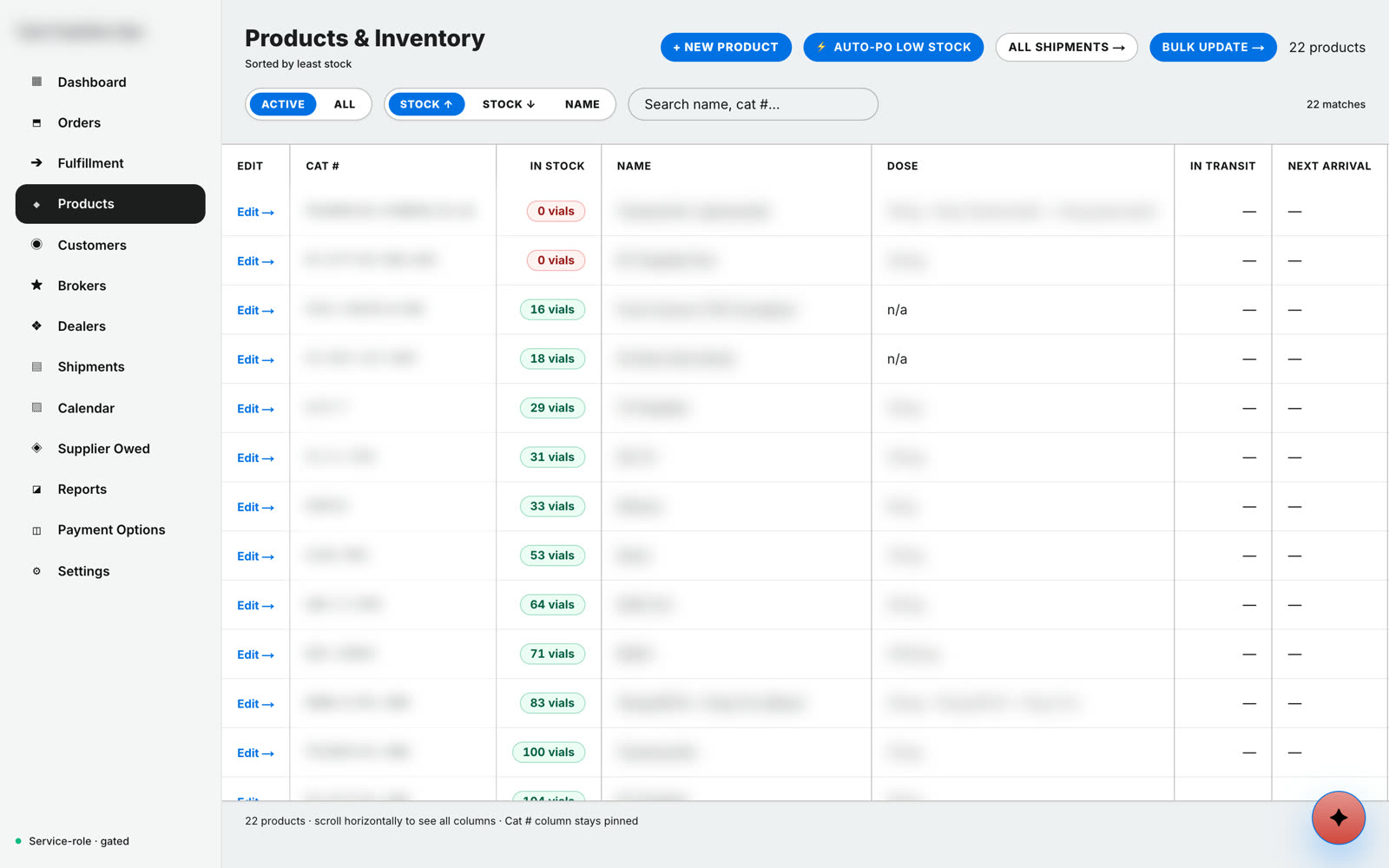
Every order,
every stage.
The whole pipeline in one board — pending, paid, packed, shipped, refunded and abandoned, each a filter. Search by order number, name, email or broker code, pick any date window, and export the lot. A refund is issued from the order page and moves the money through the gateway; a sale taken by phone or text is keyed in as a manual order and rides the same pipeline as a web one.
Was an inbox and a spreadsheet → now one pipeline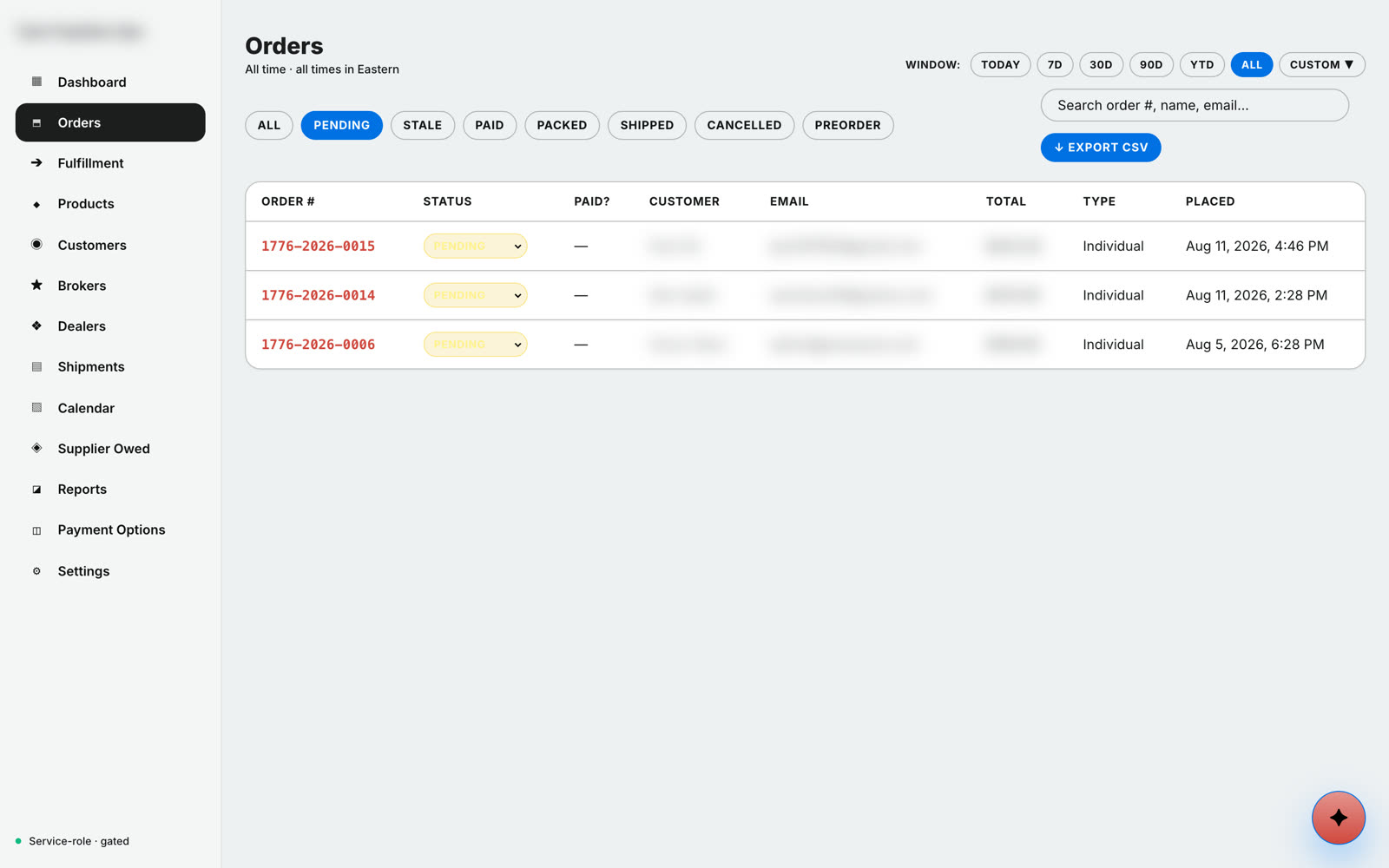
Buy the label,
print the queue.
To-pack, to-ship and shipped, oldest waiting first. One tap rate-shops the UPS services and buys the cheapest, with the items printed on the label so packing happens straight off it. Buy every label in the queue at once, print them as a single PDF, and mark the lot shipped — each customer is told by email and text with their tracking number, and the postage lands on the order as its real shipping cost.
Was labels and messages by hand → now a one-tap queue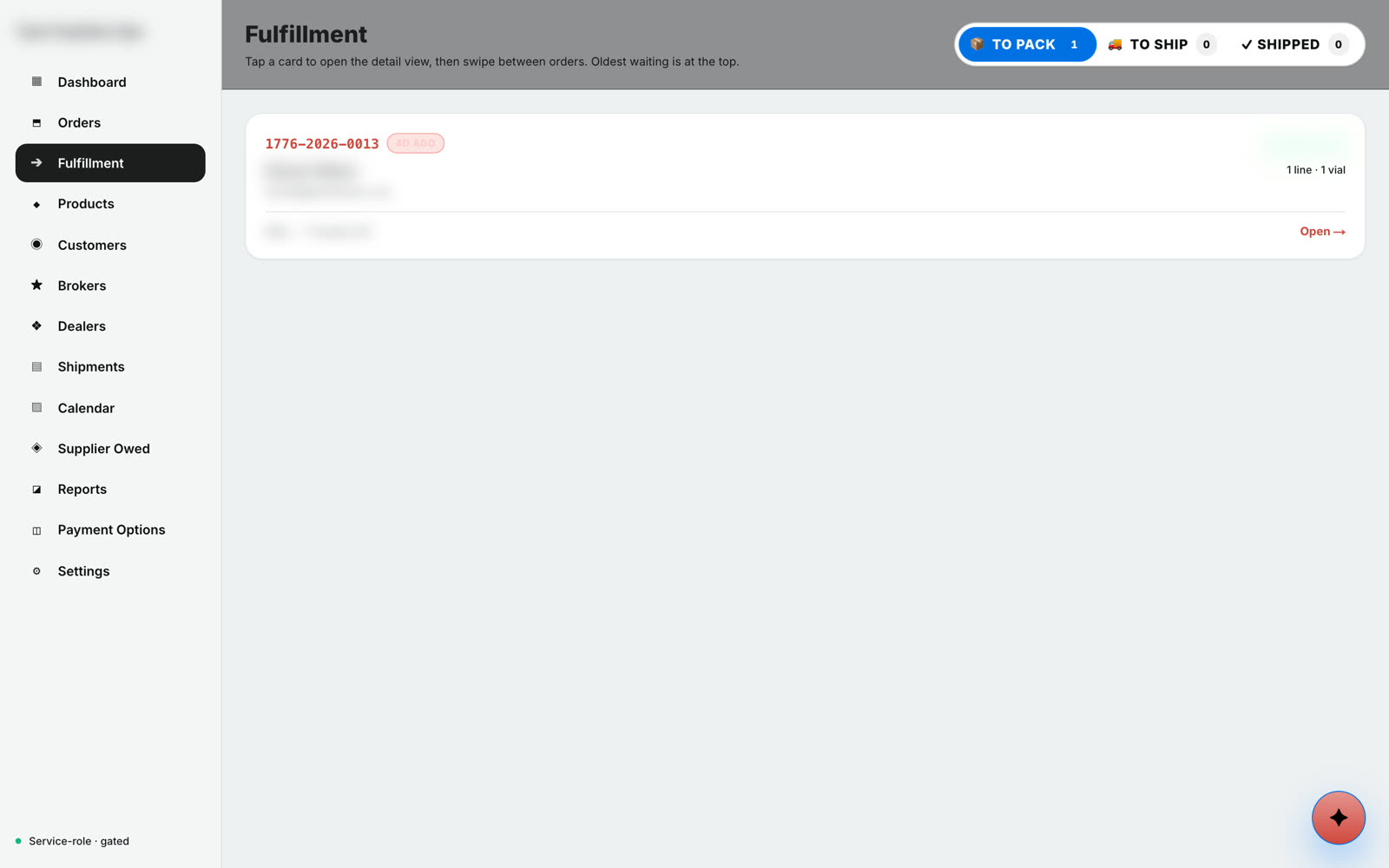
Three price lists,
one login.
Brokers subscribe on a membership platform; the system syncs it every hour, so a paid subscriber gets broker pricing on both storefronts with one login and loses it the day the subscription lapses. The owner can also create a broker from the admin and send a branded invite from the brand's own CRM. Affiliates get a per-brand code with a day-by-day and month-by-month payout report, plus a monthly product credit that resets on its own.
Was pricing negotiated in messages → now tiers that follow the login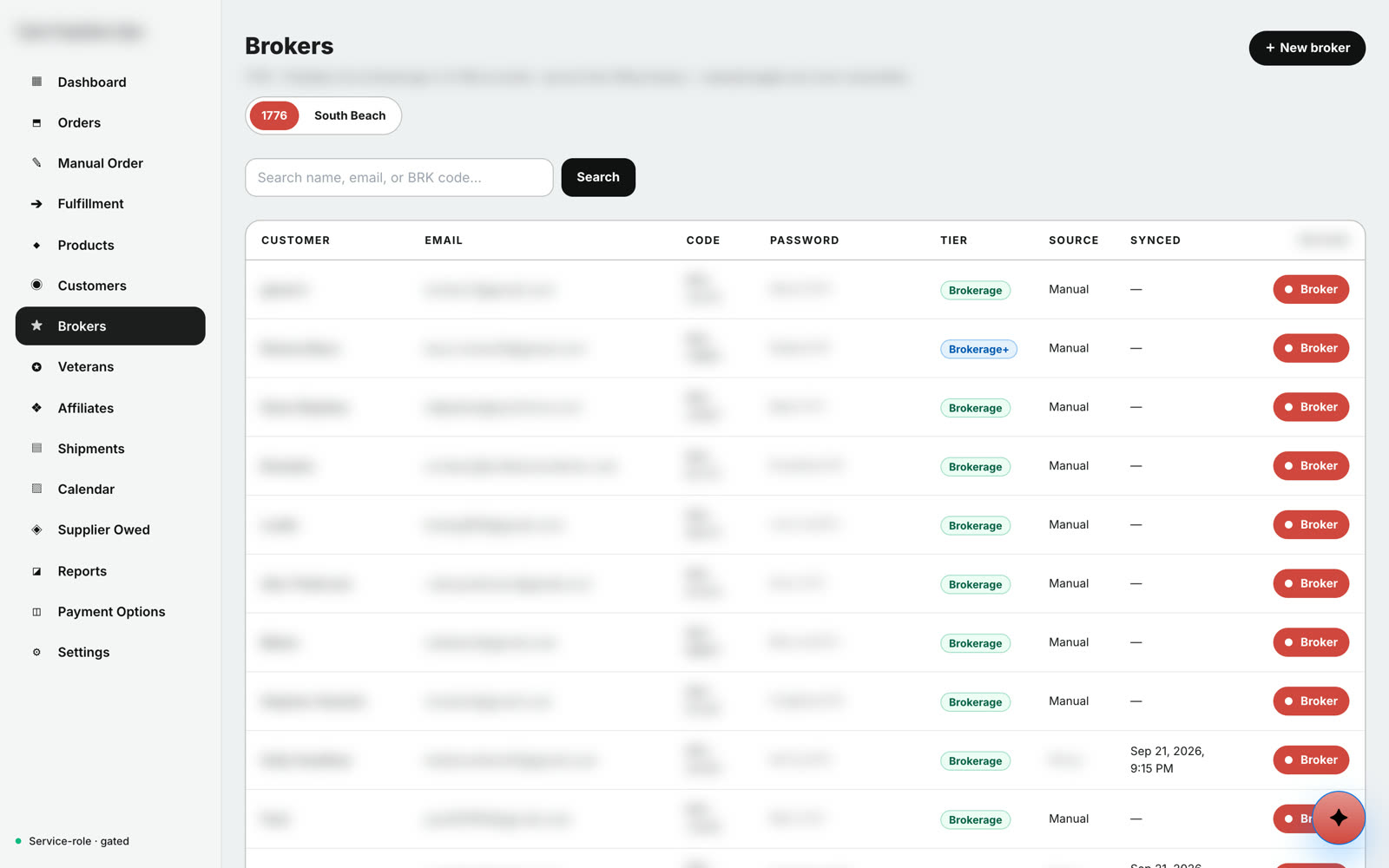
Promotions that
switch themselves on.
A sale is one row in the system: it applies itself at checkout on the date it starts, refuses to stack with other codes, and ends when the row is switched off. Branded email campaigns go out through the brand's own CRM at a daily pace with a one-click unsubscribe, an abandoned checkout gets a single nudge, and the cart offers the one add-on most orders need. Every add-to-cart, checkout and purchase reaches the ad platform from both the browser and the server, de-duplicated, so ad spend is measured against real orders.
Was a coupon announced by text → now a sale that runs on a date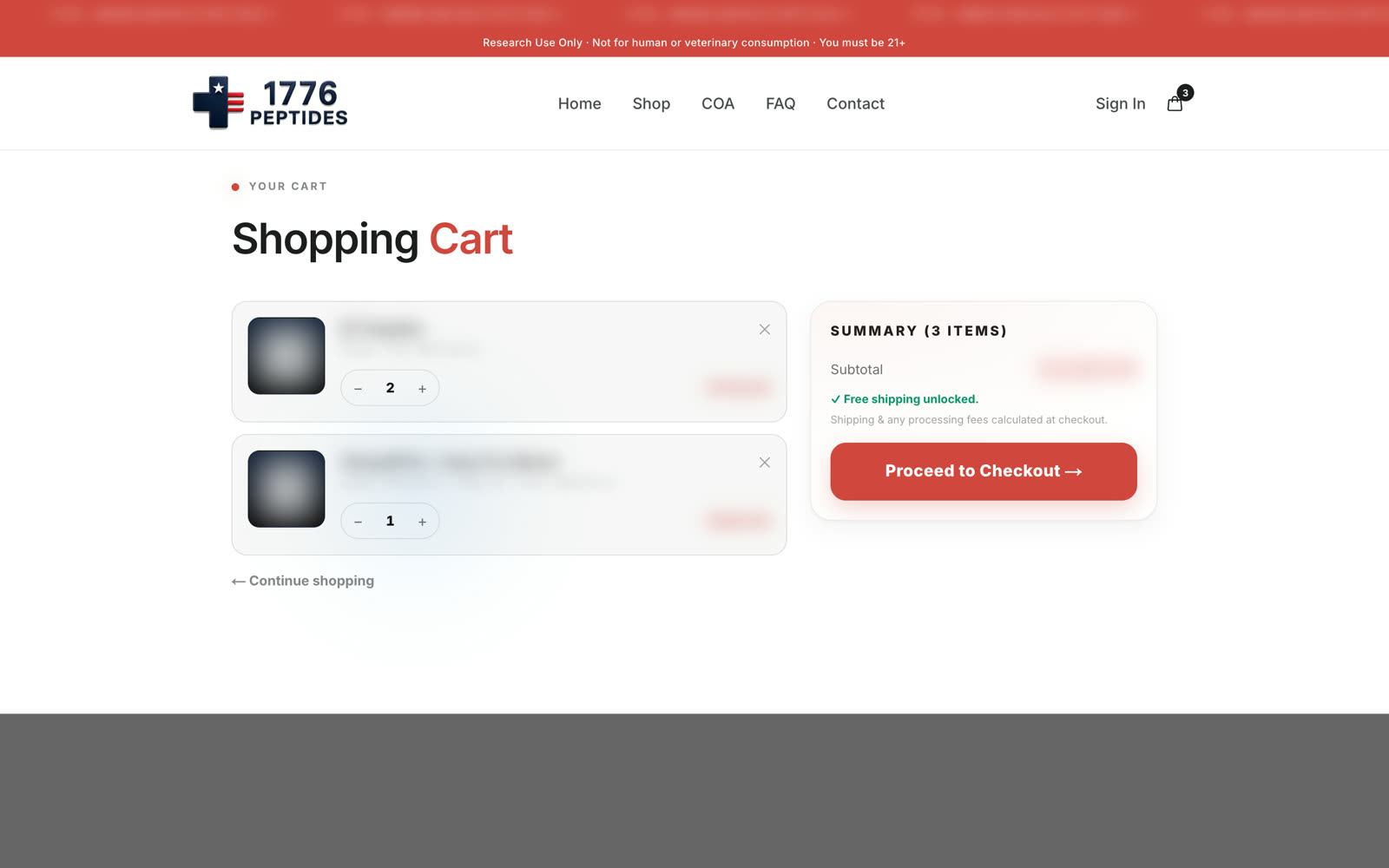
from the warehouse
no payment links
customer told
storefronts, synced hourly
The systems behind this build
Every piece of this was engineered from the ground up. Here is the same work, described as what we build.
Your customers are asking
what you already know.
Walk us through how someone orders from you today — from the first message to the package leaving. We'll show you which of those steps the software should be doing on its own.
Book a Process Automation Audit Every screen above is the real product, with catalog, pricing and customer detail blurred. Founder-engineered by ParaWav AI.