Three hundred orders,
none packed by hand.
South Beach Wellness, built end to end — a merchandised catalog of over a hundred products, card checkout on the page, and an operator platform that hands every paid order to the fulfillment partner, pulls the tracking back, tells the customer, and books what the supplier is owed. In its first month it shipped over three hundred orders without anyone in the business packing a box.
Real product · catalog, pricing and customer detail blurred
A product list too long to browse. Orders retyped into the warehouse's system. Tracking numbers pasted into emails.
Then it became automatic.
One brand,
every page.
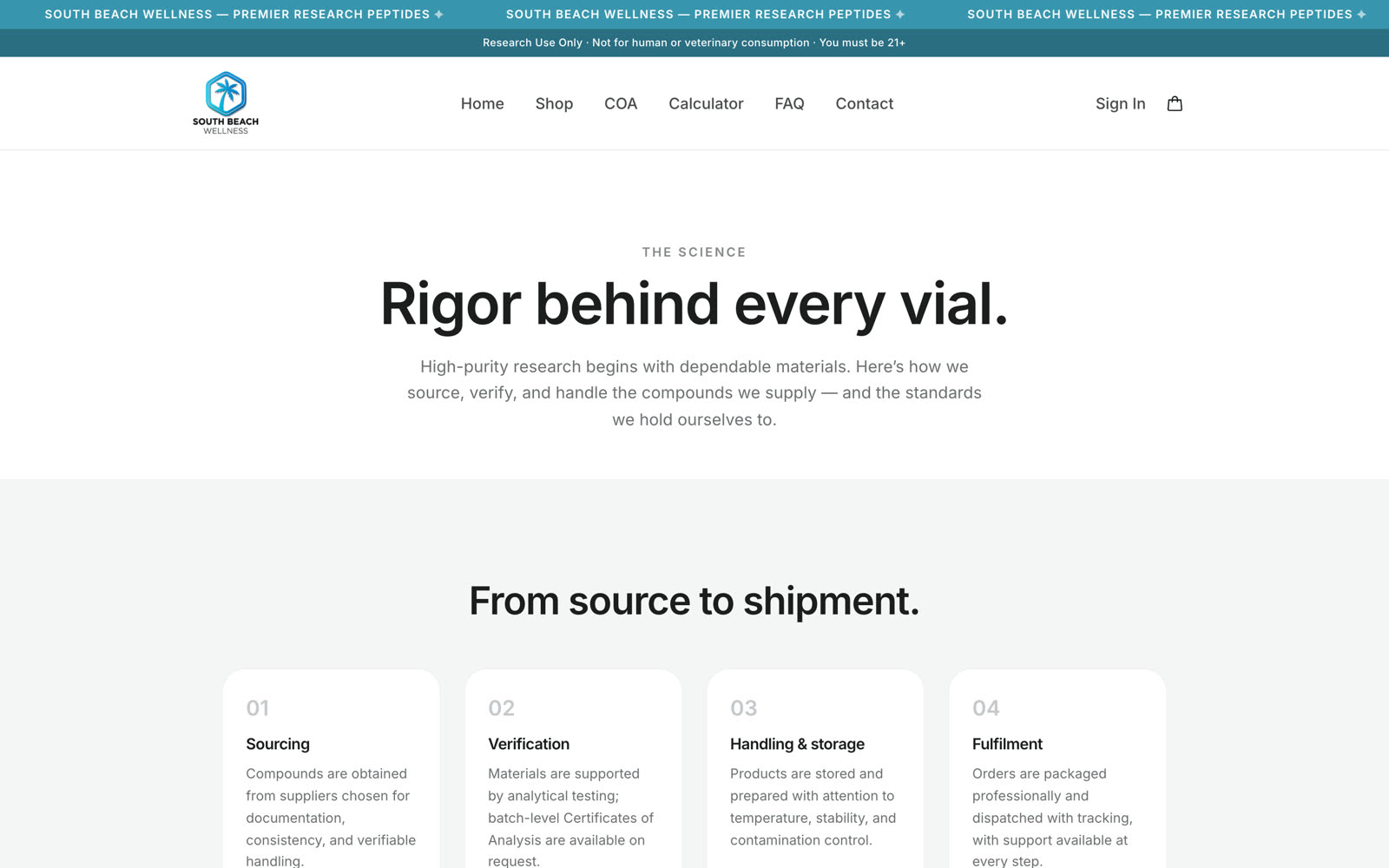
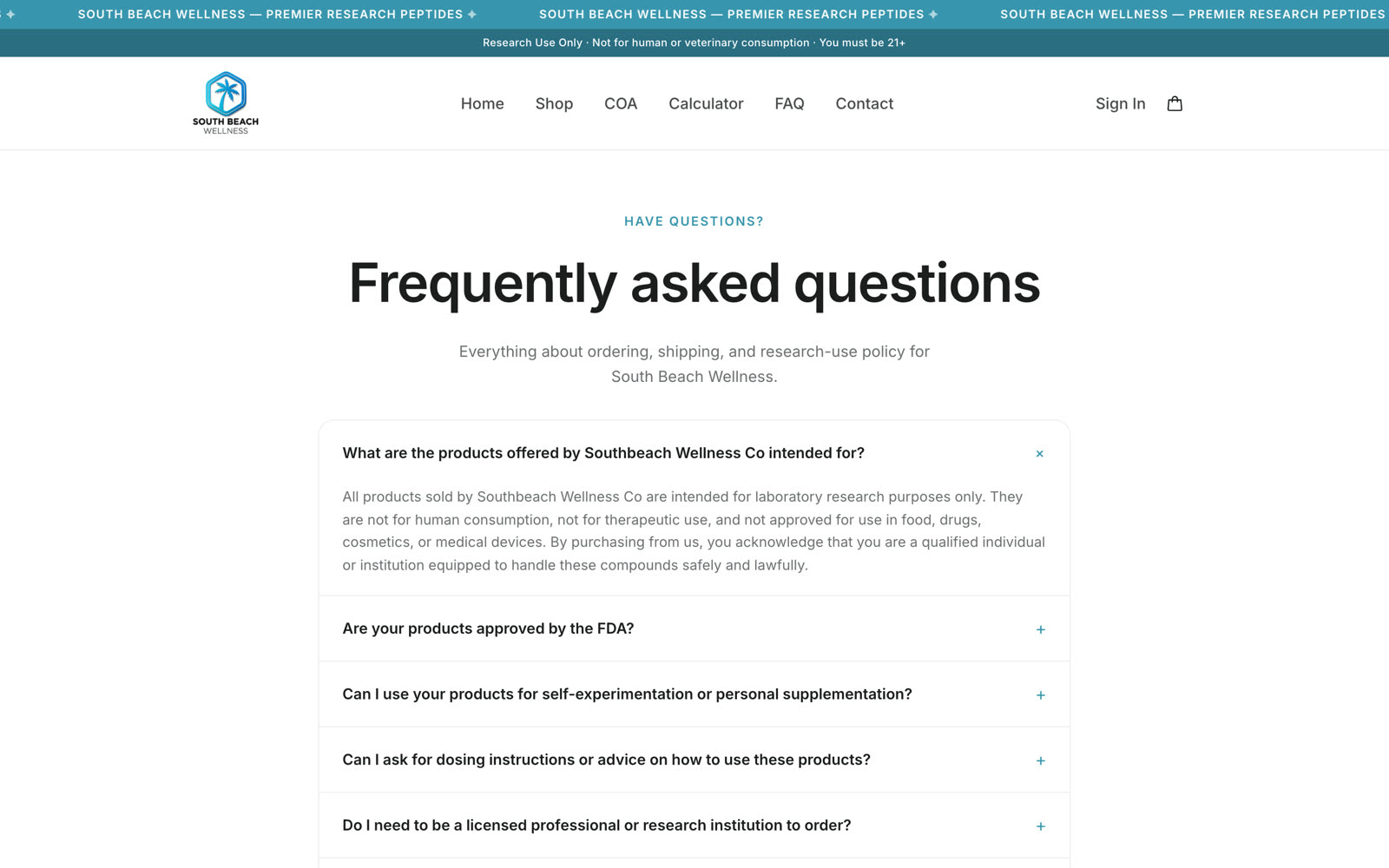
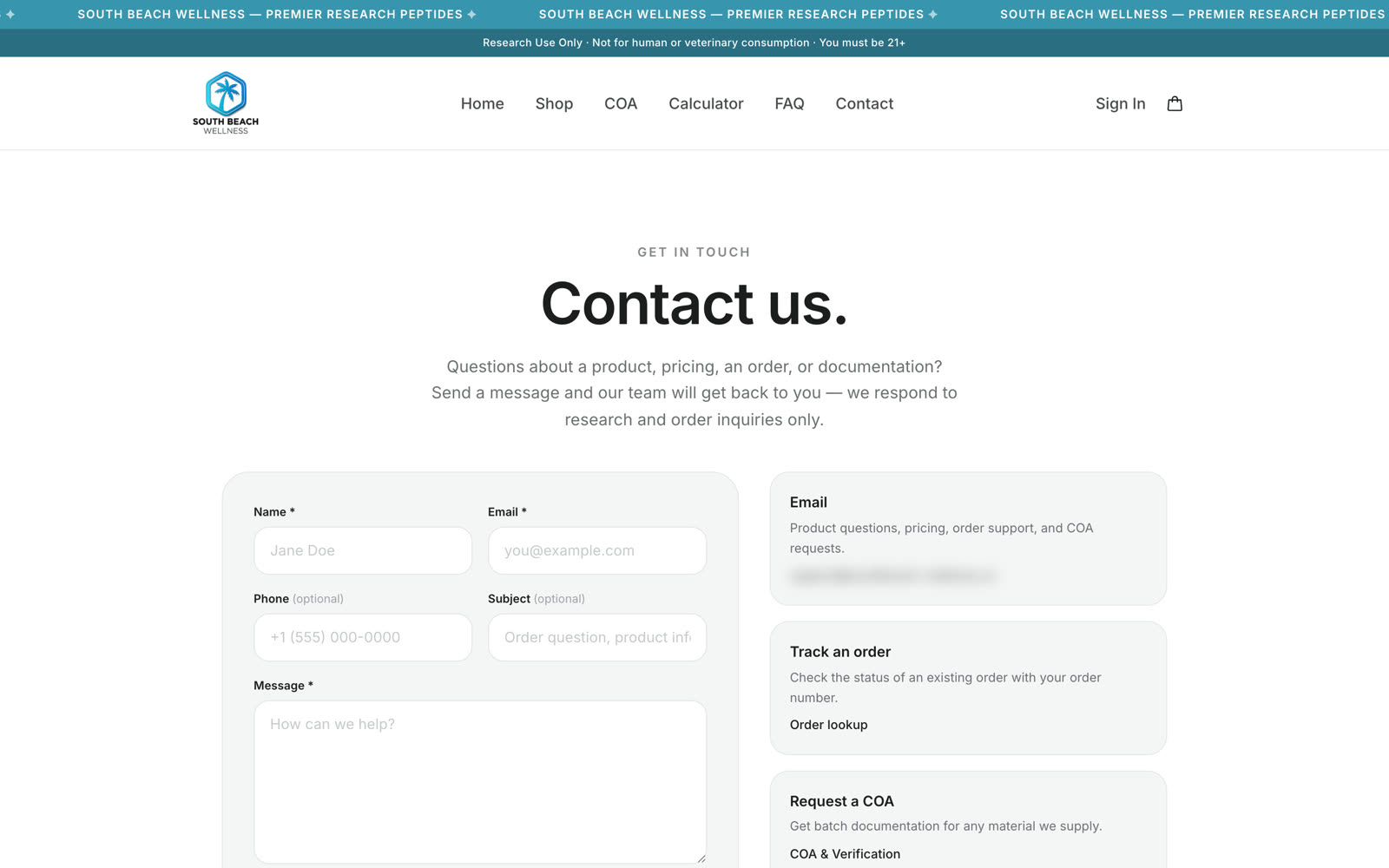
The whole web presence designed as one piece — the home page, the standards behind the catalog, the brand story, a questions page that answers the ones people actually ask, and a contact route. The research-use terms ride on every screen rather than sitting in a footer nobody opens.


A hundred products,
one page.
A catalog that size is unusable as a list, so it is merchandised instead — grouped into browsable categories, searchable, each strength its own card. Stock mirrors the fulfillment partner's warehouse every five minutes, so the storefront only sells what can ship today, and the owner can pin a count by hand when the feed is wrong. Depth stops being a problem to apologise for and becomes the reason to buy here.
Was a list too long to read → now a catalog that knows its own stockPay on the page,
card in hand.
Card fields live on the checkout itself, with Apple Pay and Google Pay beside them. The address autocompletes from a verified source, the running sale applies itself and refuses to stack, and package protection is one optional tick. An order cannot be charged twice, an unpaid one releases after thirty minutes, and a buyer who stops at the card step gets a single reminder.
Was a payment link sent by hand → now card, wallet, done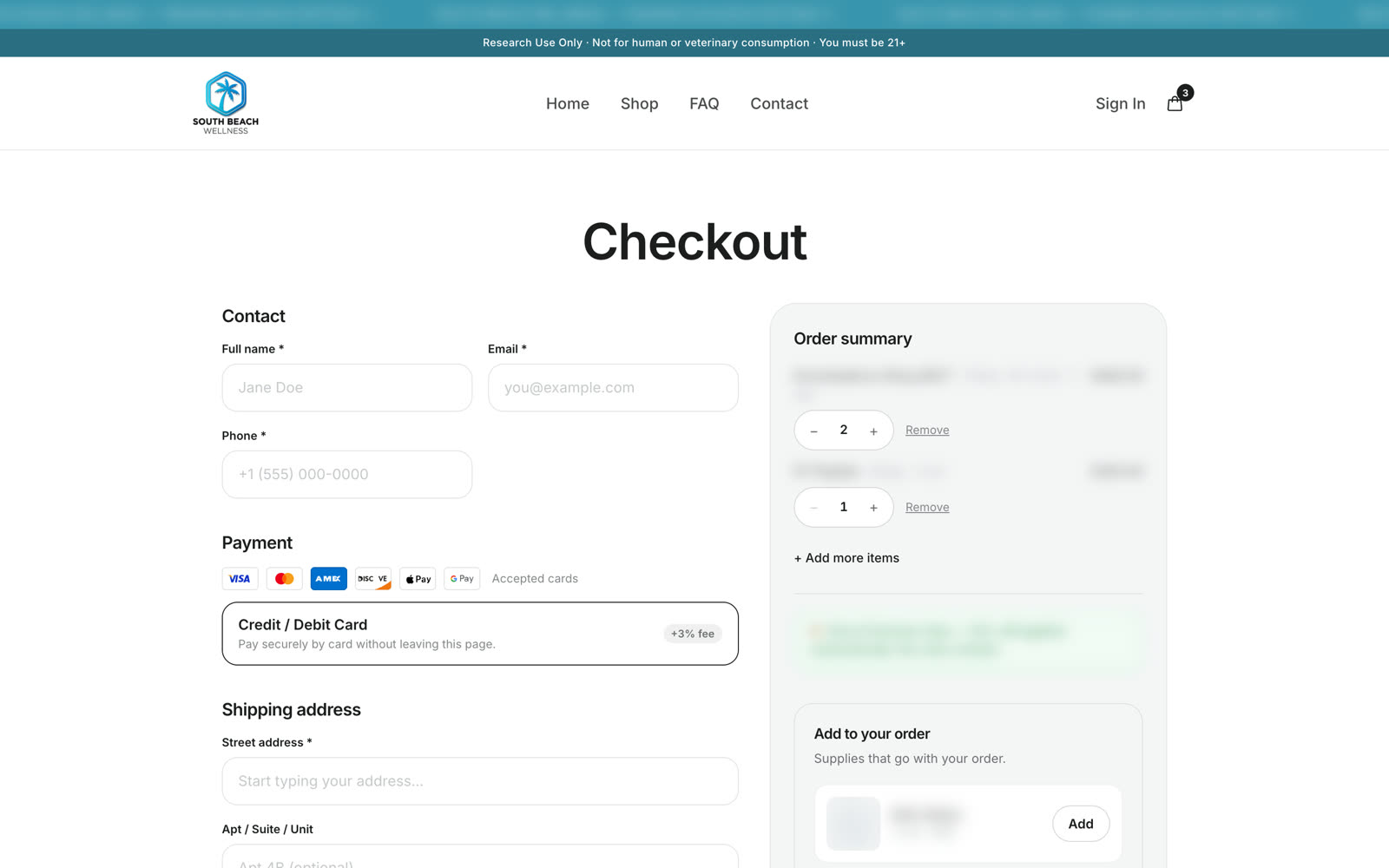
Customers track
themselves.
An order number and the email it was placed with is the whole flow. Buyers check their own status and tracking whenever they want, and the moment the warehouse ships, the tracking number reaches them by email and text — which keeps the answer available at two in the morning and off somebody's task list.
Was answering status messages by hand → now self-serve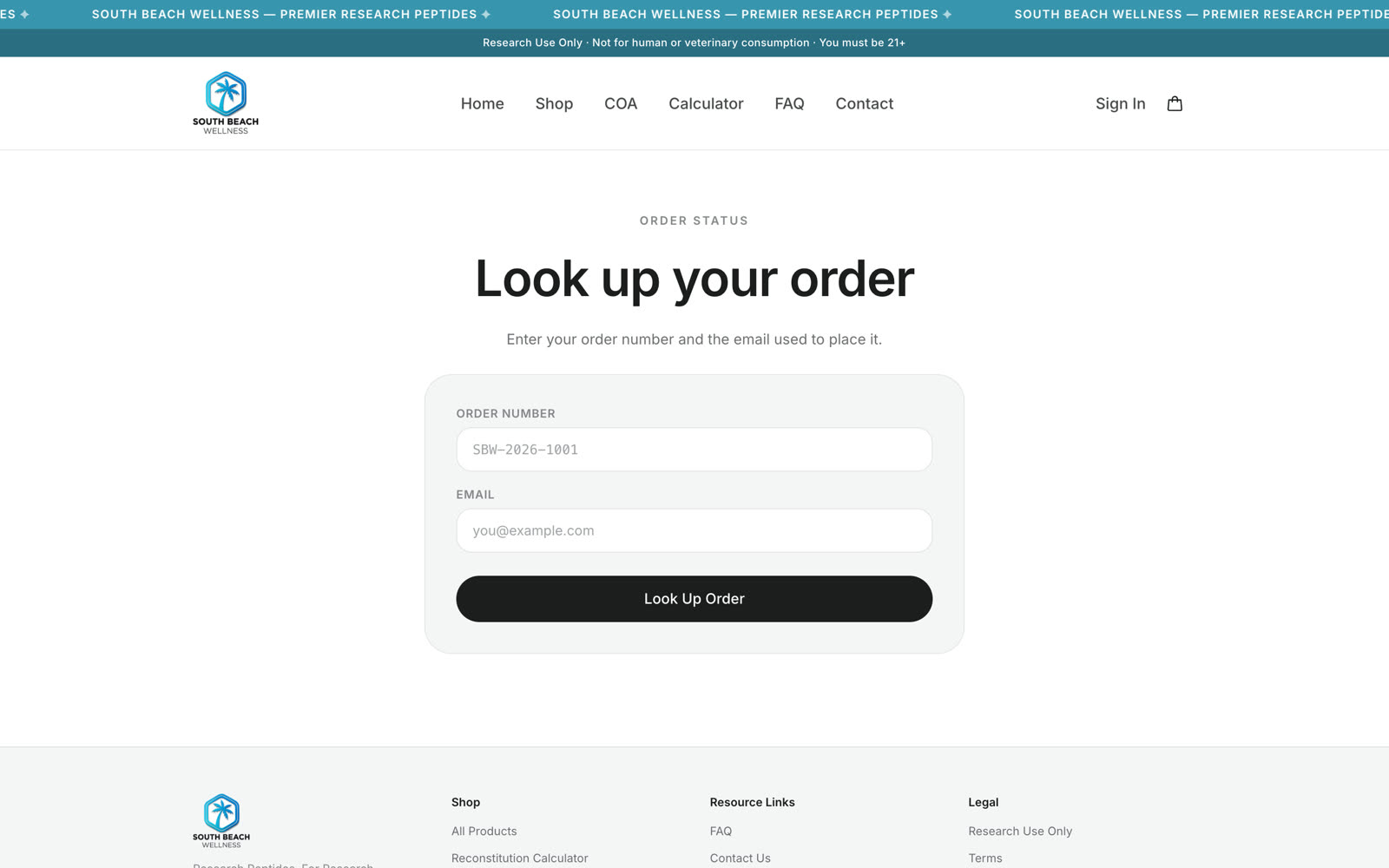
Every paid order,
handed off on its own.
The brand does not run a warehouse; a fulfillment partner does. So the platform speaks the partner's shipping software directly: each paid order appears in their queue the moment the card clears, and when they ship, the tracking flows back, the order flips to shipped and the customer is told. Nobody retypes an address, and nothing is packed by the business itself.
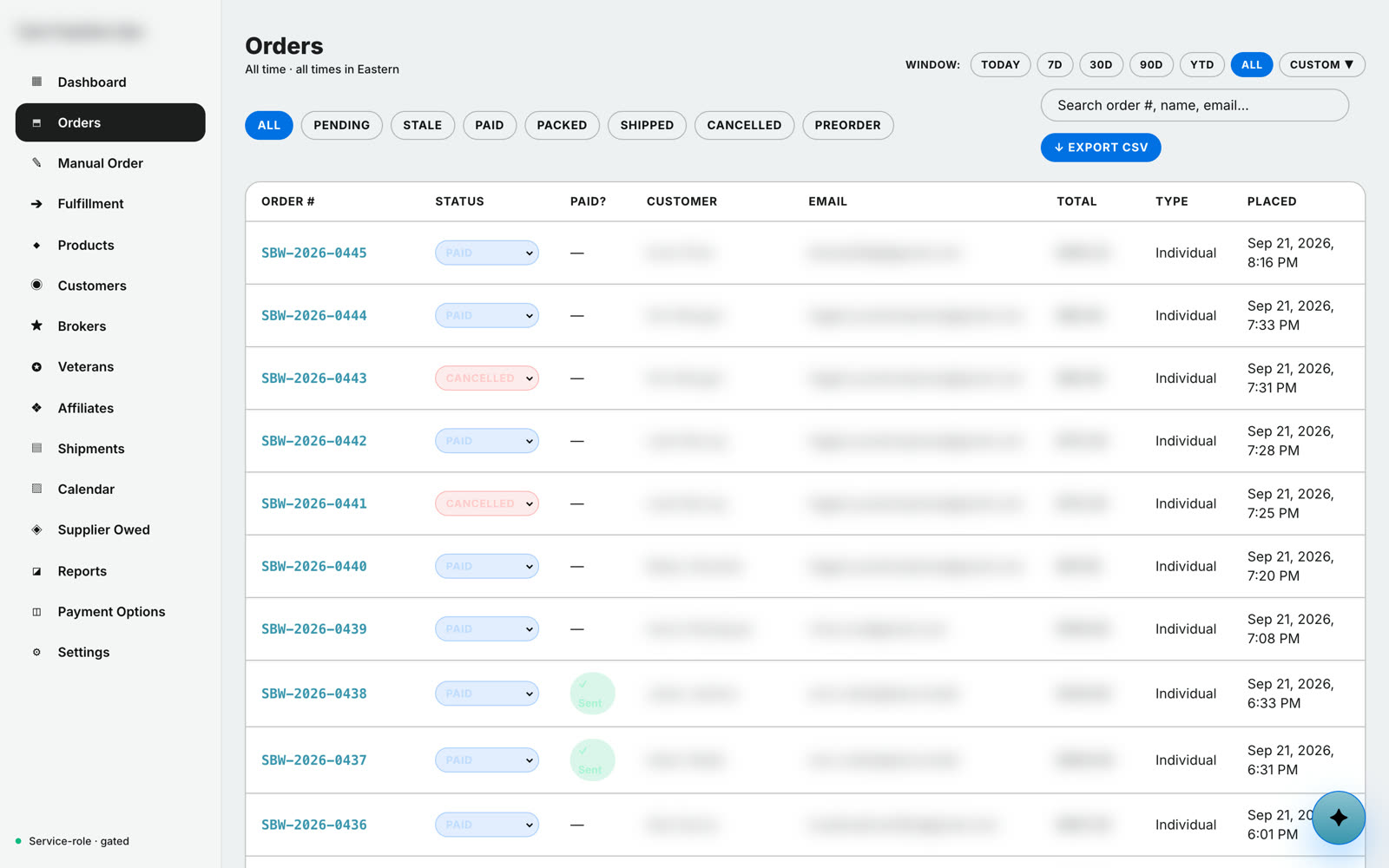
Real cancellations,
not abandoned carts.
The dashboard reads the operation by brand and date window — paid, shipped, refunded, package-protection revenue, and a split that most storefronts get wrong: an order that was paid and refunded is a cancellation; a cart that never paid and released its stock is an abandoned checkout. Keeping them apart is what makes the cancel rate a number worth acting on.
Was one alarming number → now two honest ones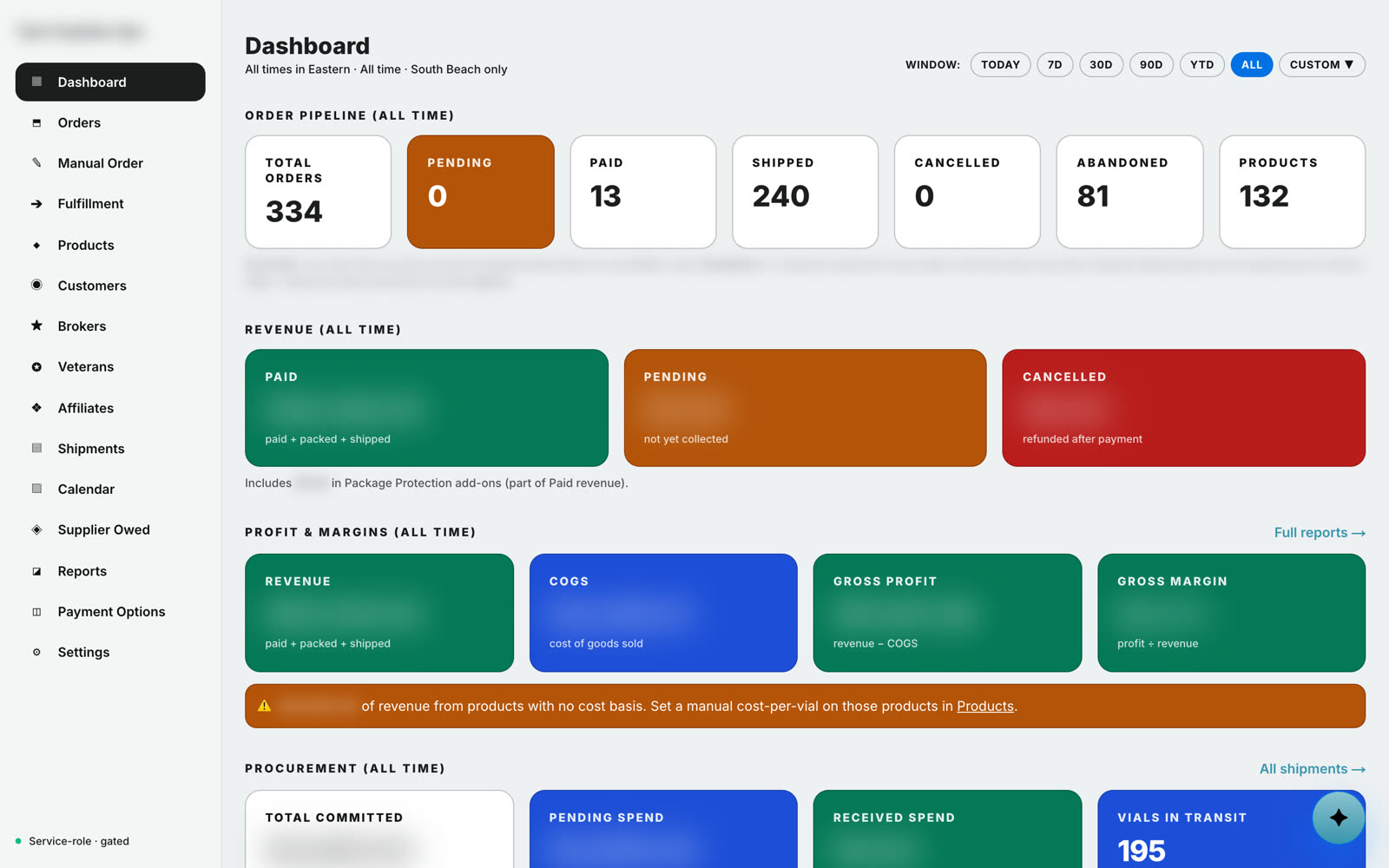
What the warehouse
is owed, per order.
Every dropshipped order is a liability the moment it is placed. The platform snapshots the supplier cost of each line at checkout, adds the supplier's shipping, shows the margin, and keeps a running balance with a mark-paid on each order. A replacement sent because of a warehouse error is logged as exactly that — it reaches the partner's queue but never bills the business twice.
Was a reconciliation at month end → now a ledger that is always current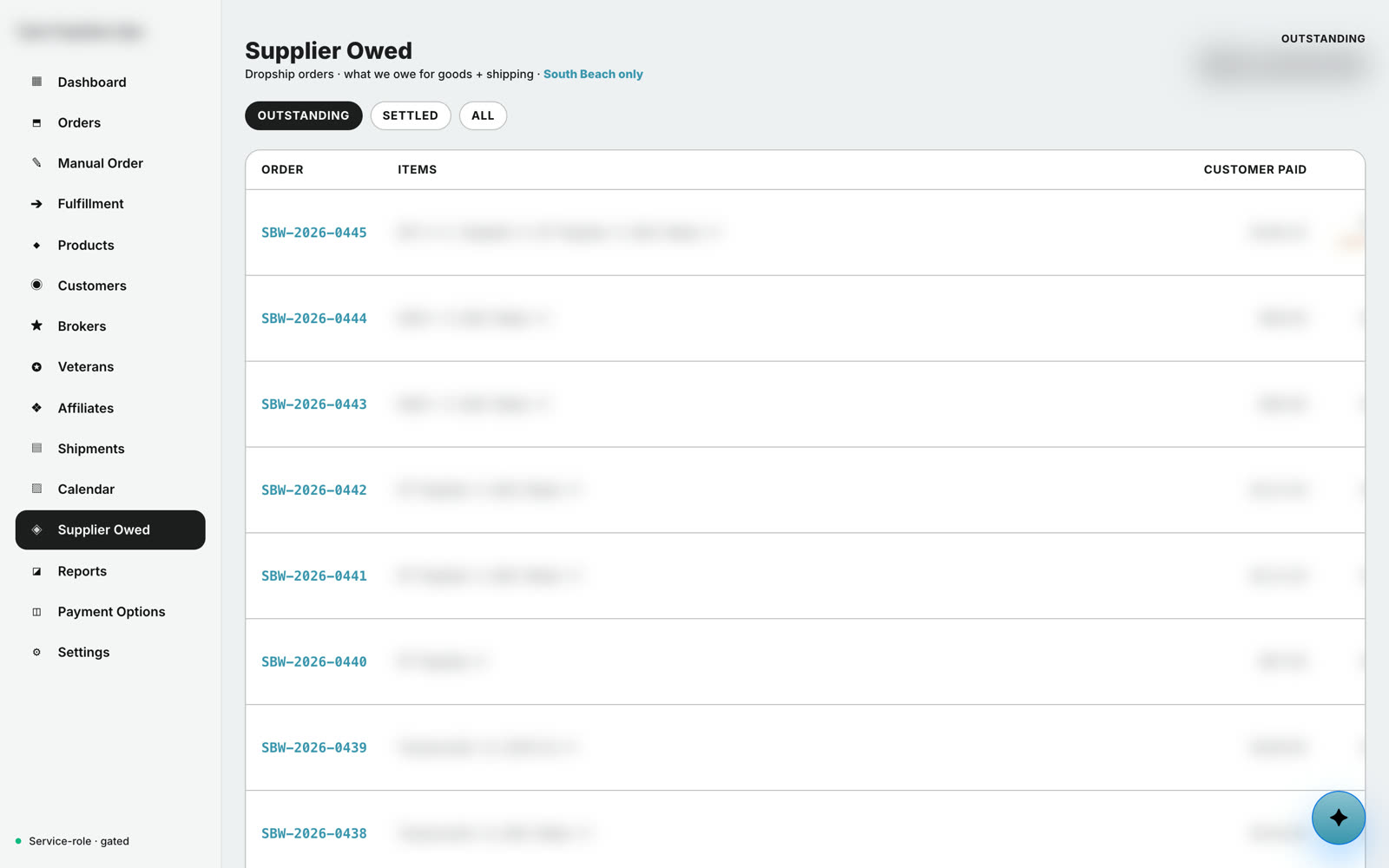
Every product,
structured properly.
Over a hundred products carried across with their catalogue numbers, strengths and formats as real fields rather than text buried in a product title, each mapped to the partner's own stock-keeping unit so the two systems agree. Three price lists per product, retail, broker and broker-plus, edited by the owner's team without a developer.
Was product detail trapped in names → now structured data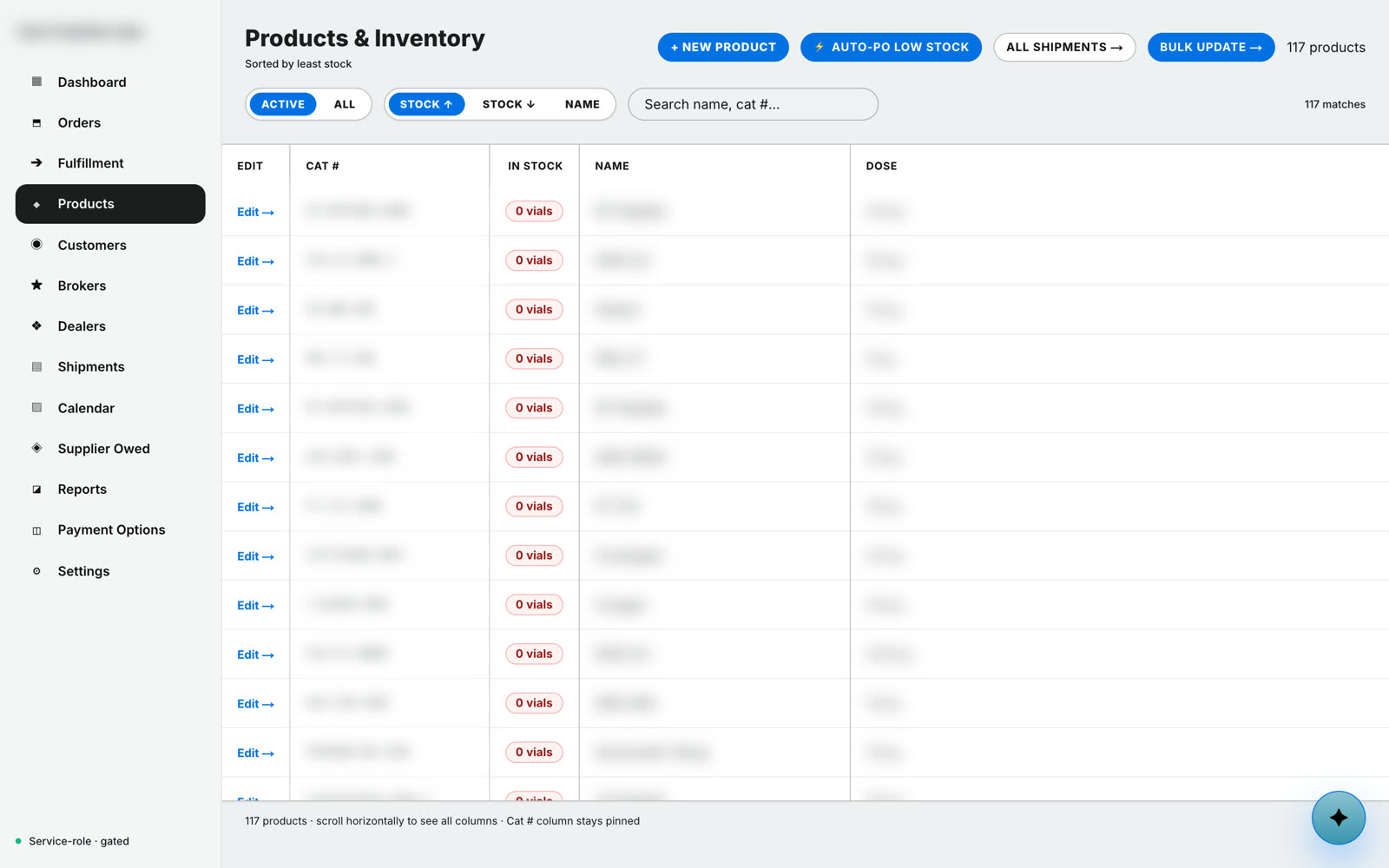
Tiers that follow
the login.
Brokers subscribe on a membership platform; the system syncs it every hour, so a paid subscriber gets broker pricing on both of the owner's storefronts with one login. Affiliates belong to one brand, carry their own code, and get a day-by-day and month-by-month report of orders, sales and commission bucketed for payout — plus a monthly product credit that resets on its own. A sale taken by text is keyed in as a manual order and rides the same pipeline.
Was commission worked out by hand → now a report per code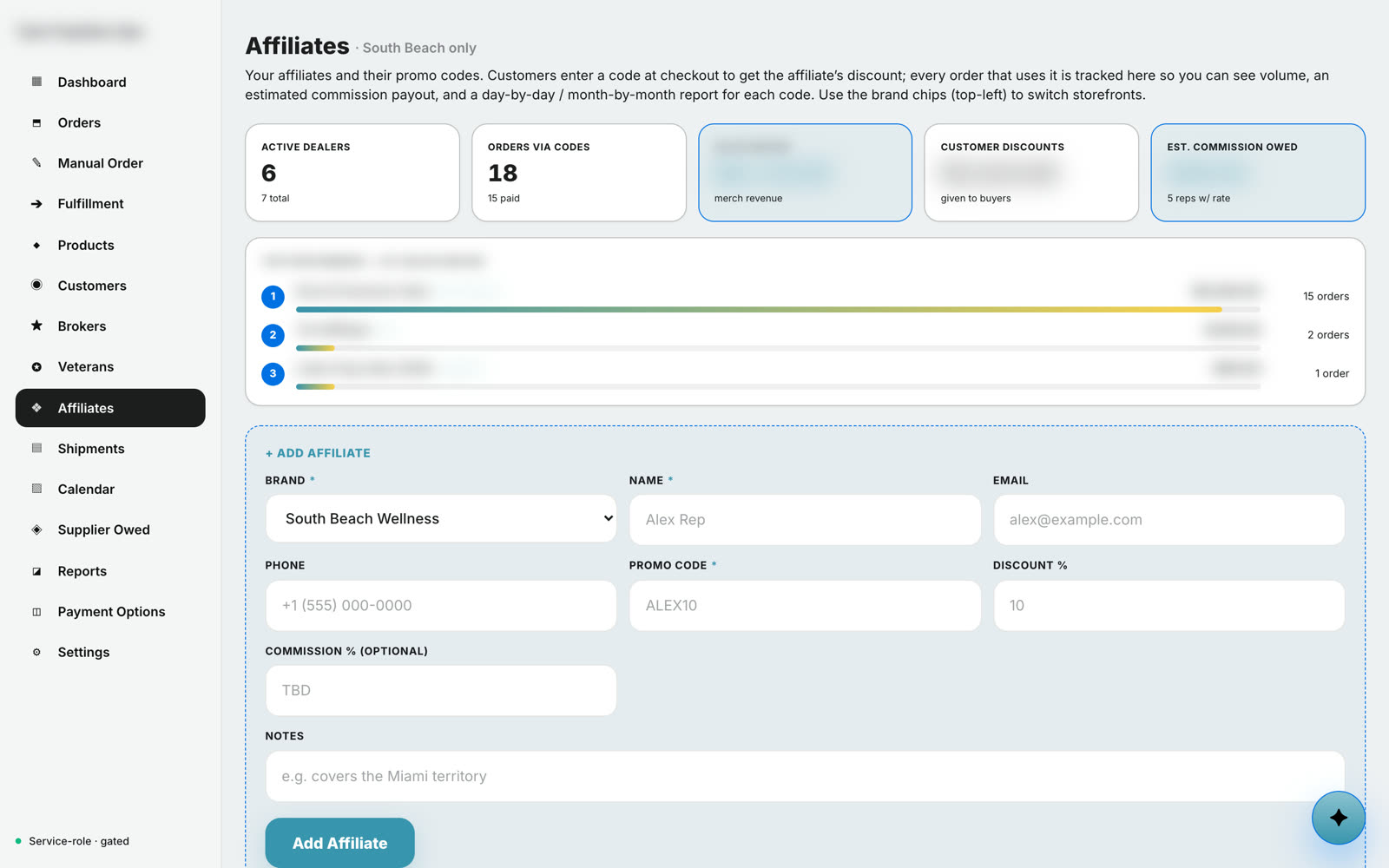
Ad spend, measured
against real orders.
Every page view, add-to-cart, checkout and purchase reaches the ad platform from both the browser and the server, de-duplicated, with new and returning customers told apart — so the campaign optimises on orders that actually happened. Sales switch on from a single row, branded email campaigns go out through the brand's own CRM at a daily pace, an abandoned checkout gets one nudge, and the cart offers the add-on most orders need.
Was a pixel counting page views → now a funnel the ads can learn from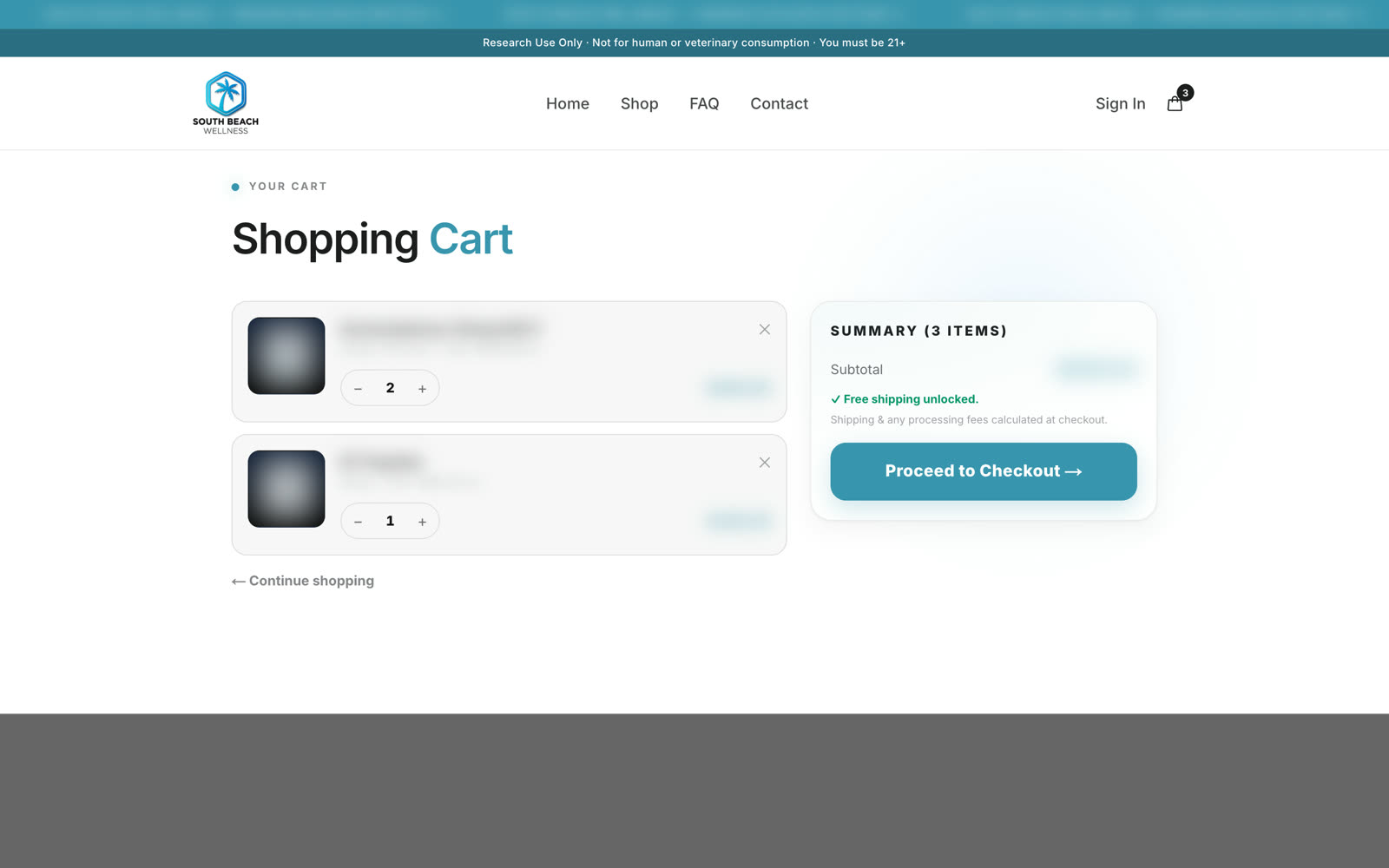
on the storefront
none packed in-house
fulfillment partner
no payment links
The systems behind this build
Every piece of this was engineered from the ground up. Here is the same work, described as what we build.
Your catalog is bigger
than your software.
Show us what you sell and how an order gets to the customer today. We'll show you where the catalog is fighting your customers, and which of those steps software should be handling instead.
Book a Process Automation Audit Every screen above is the real product, with catalog, pricing and customer detail blurred. Founder-engineered by ParaWav AI.