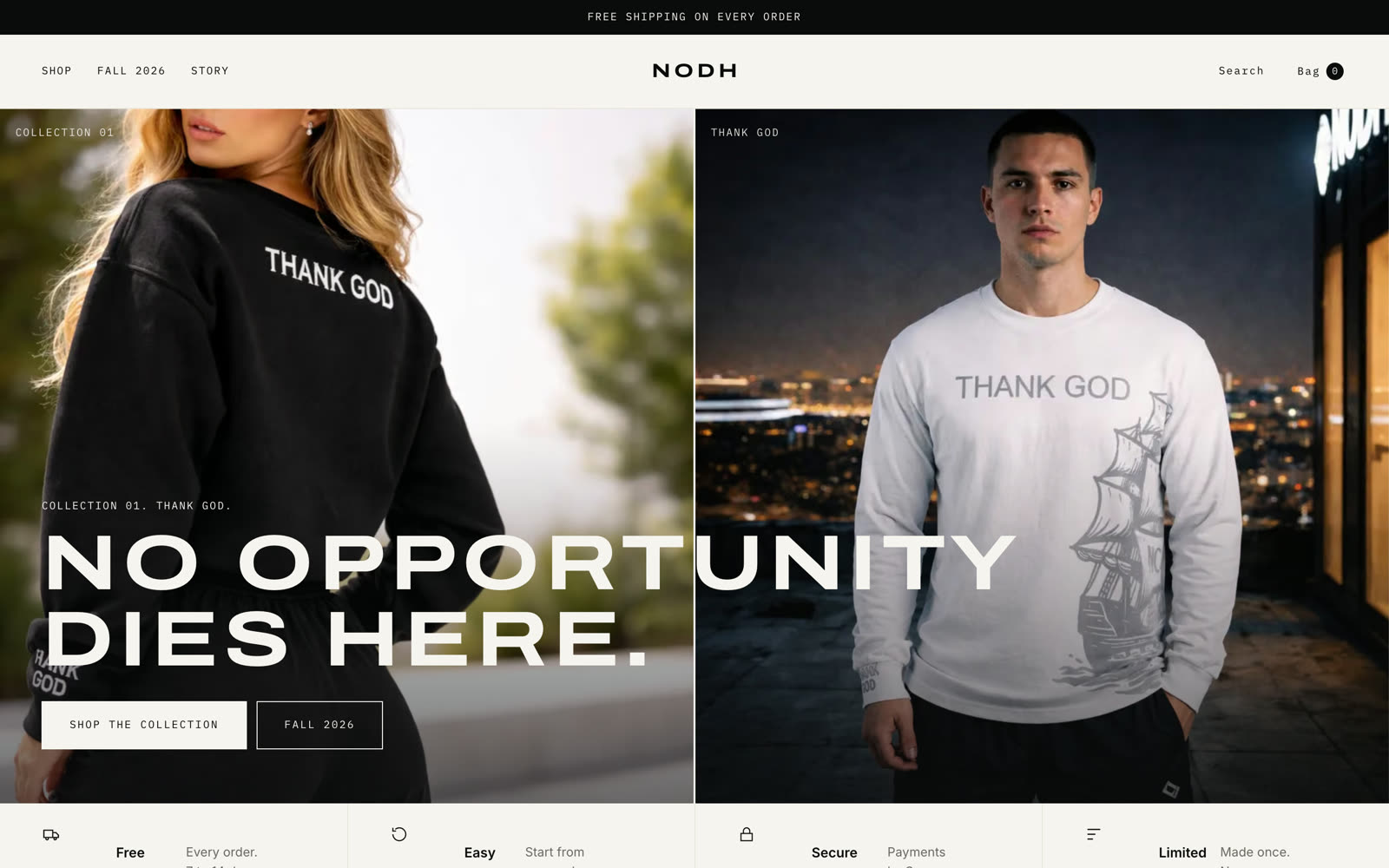
No opportunity
dies here.
NODH is a faith-driven streetwear label that sells in drops: small runs, never restocked. It was selling from a funnel builder's built-in store. ParaWav rebuilt it as NODH's own store: drop pages with a countdown and an early-access list, size-by-size runs that can't oversell, card checkout through Square, self-serve returns, a packing portal and a back office built around the run. The CRM stayed for marketing.
Real product · live in market · customers and figures blurred
A store inside a funnel builder. Stock counted by hand. Drops announced, not enforced.
Then it got
a store of its own.
Editorial, quiet,
built for the photos.
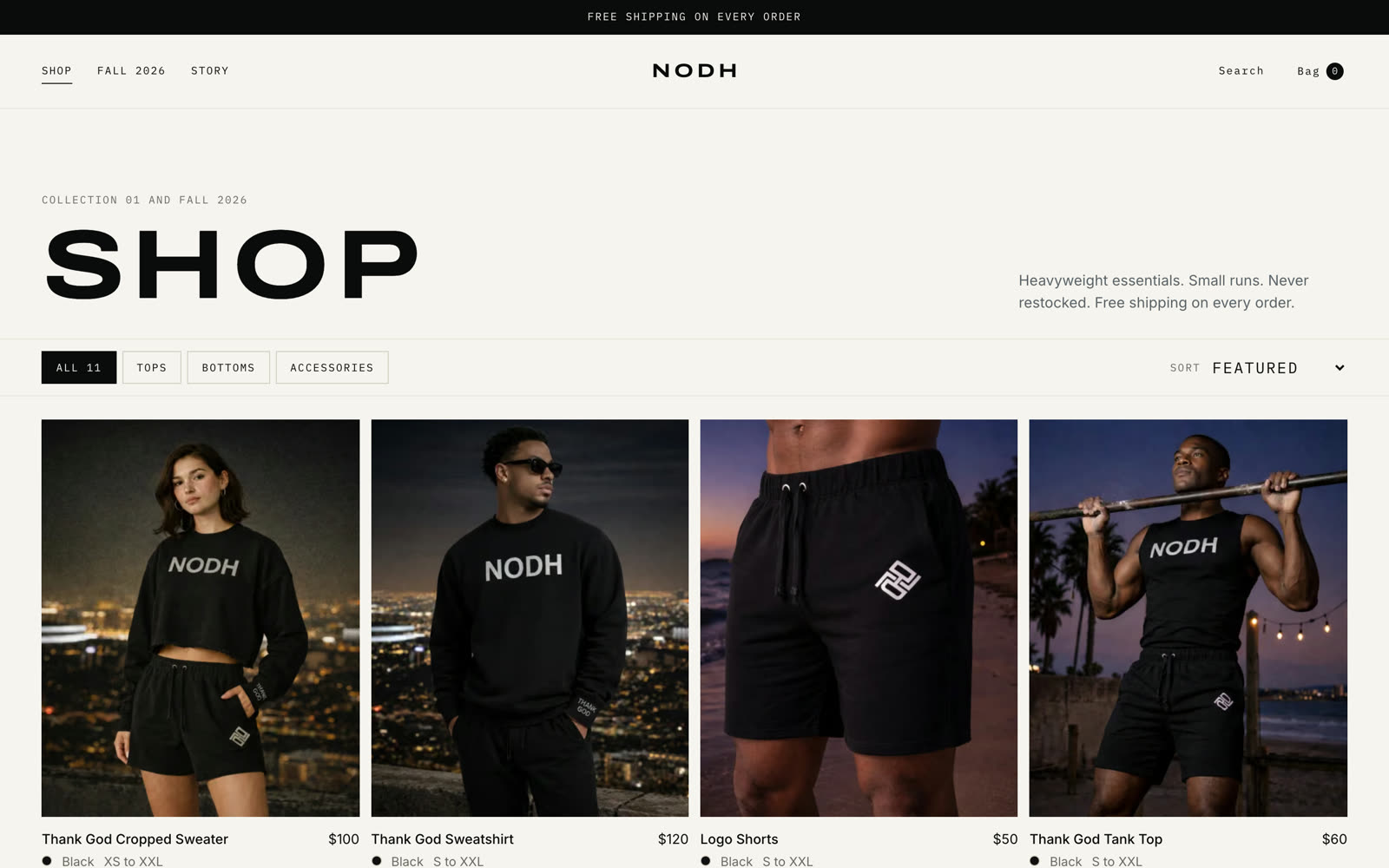
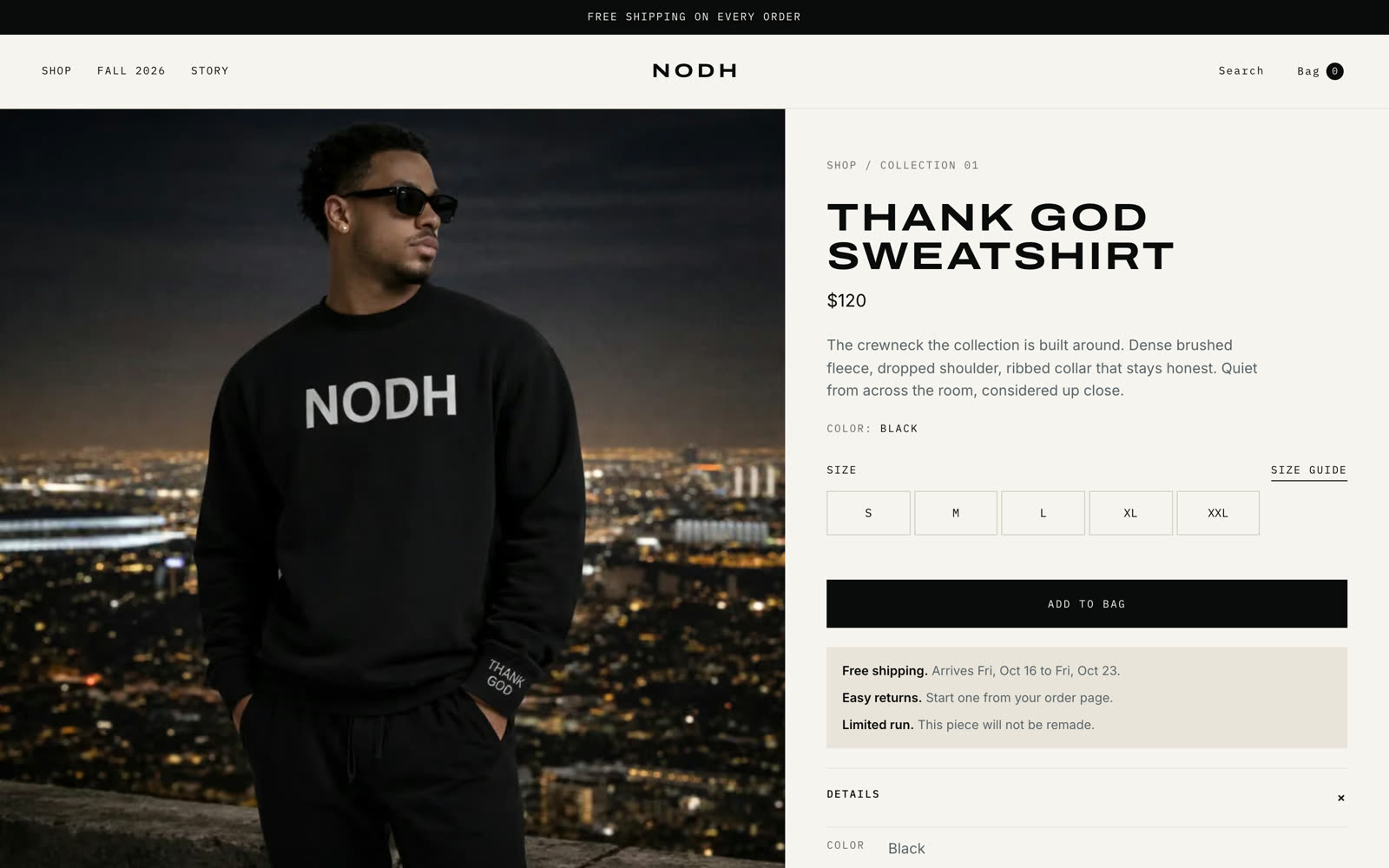
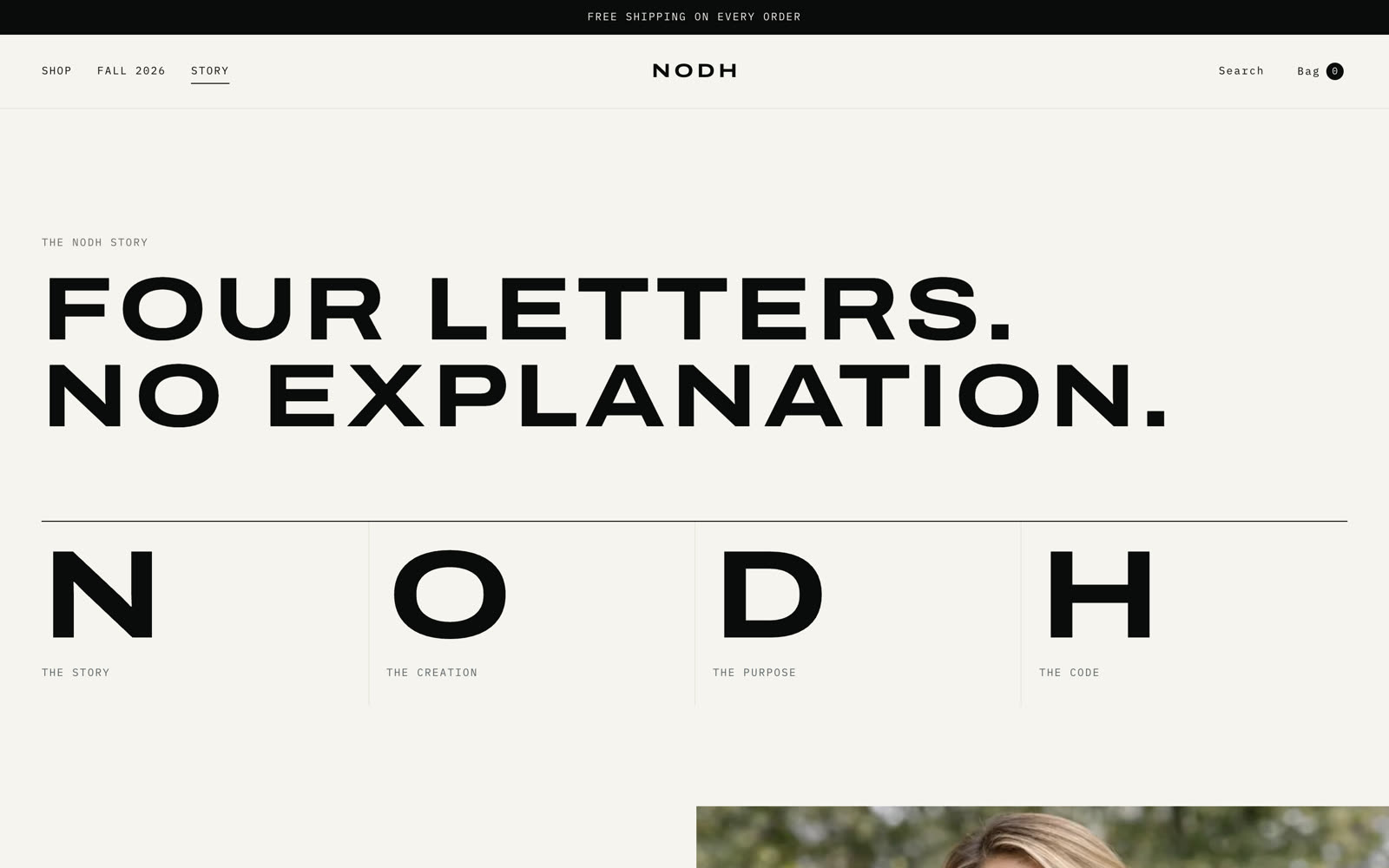
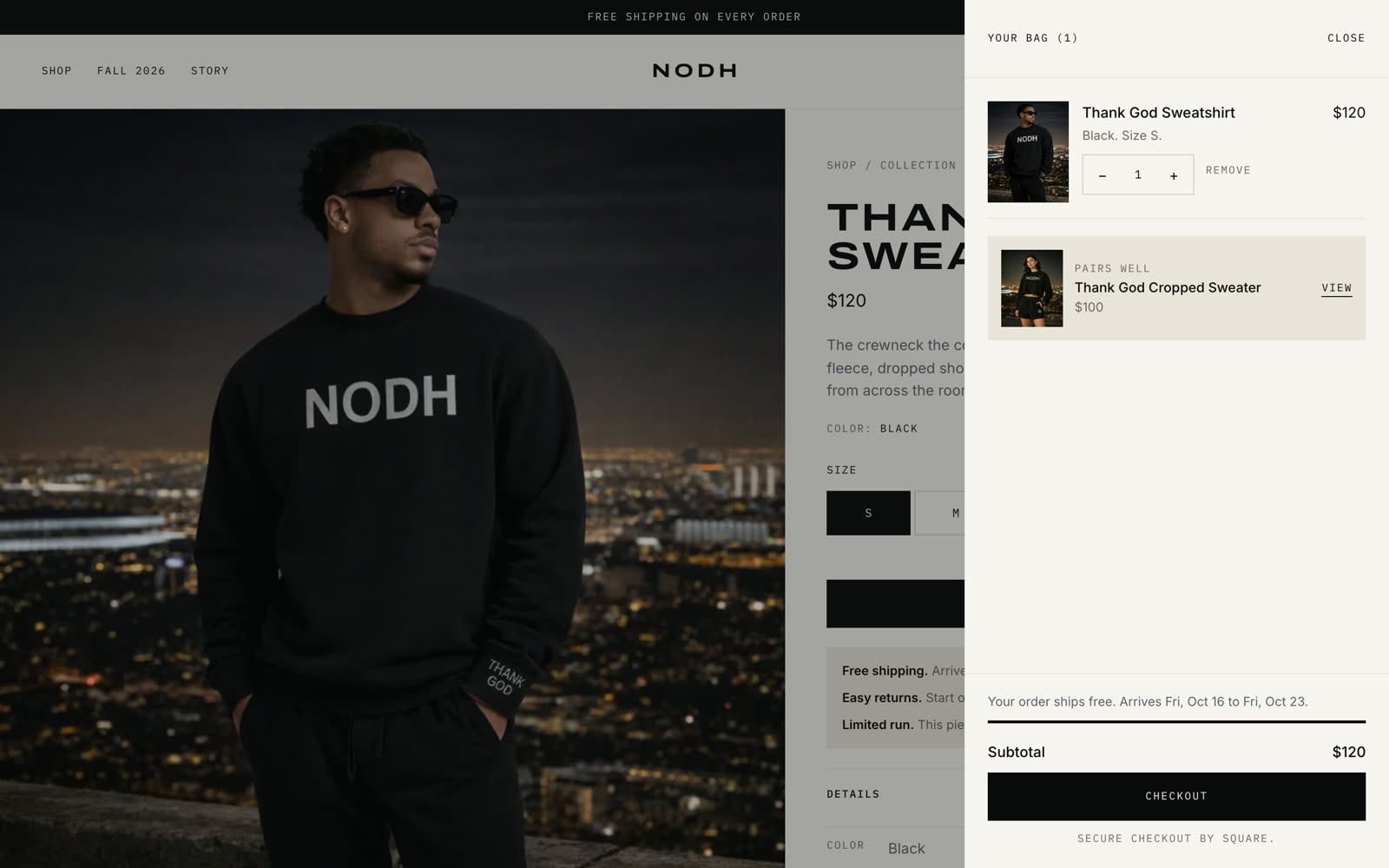
A bone-and-black storefront that lets the photography lead: the collection, product pages with sizes and fit notes, the drop page, the brand story, the bag and checkout. Free shipping and returns are stated on every product, not hidden in a policy.
Countdown on.
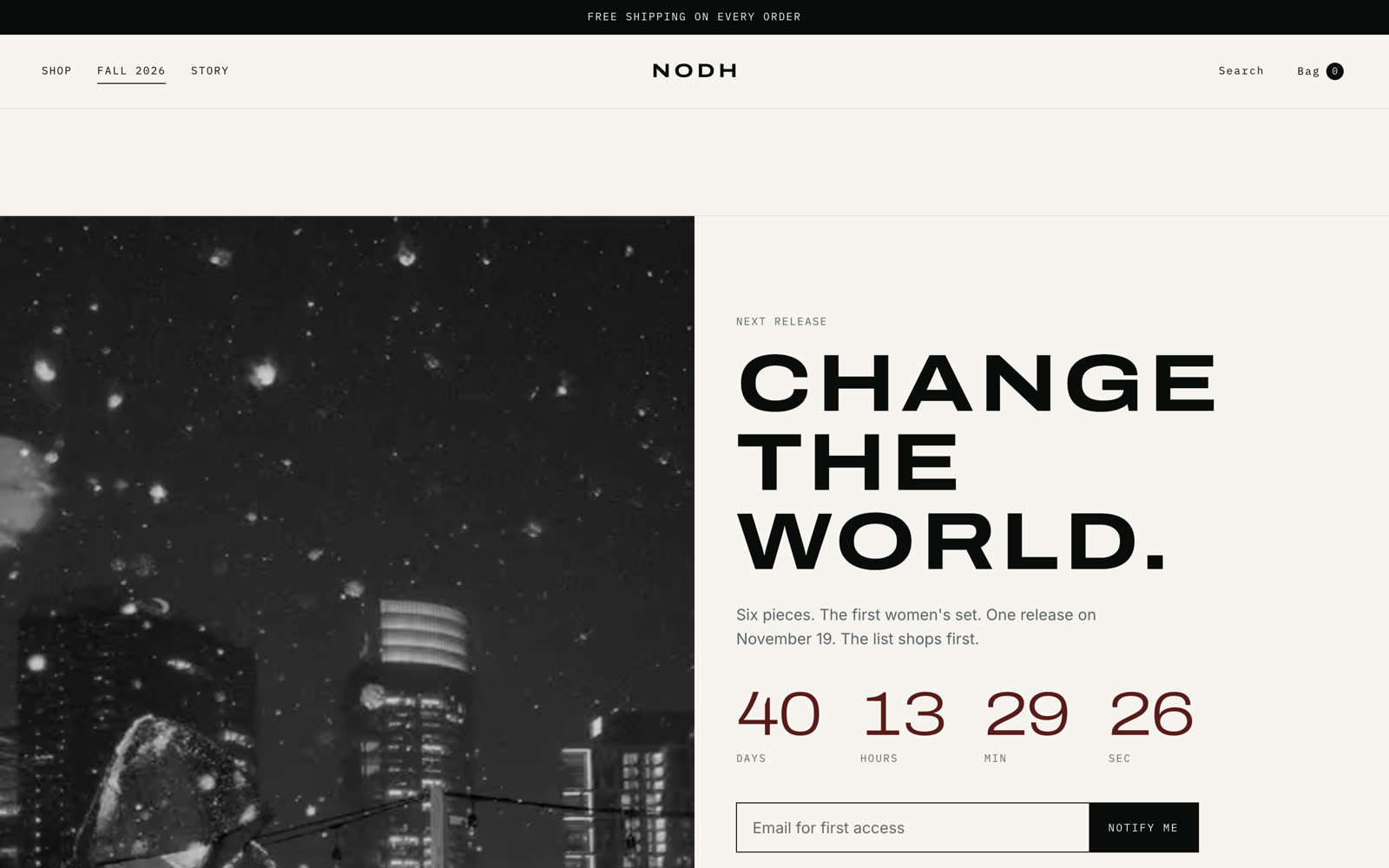
The list shops first.
A release has its own page with a live countdown to the minute it opens. Pieces in an upcoming drop show the release date and a Notify-me field instead of a buy button, and flip to Add to bag at the release minute without a reload. People on the early-access list get in before everyone else.
Was a post saying "dropping soon" → now a release the store enforces to the minuteWhen a size is gone,
it's gone.
Every piece is a fixed run, tracked size by size. Checkout reserves the exact units, so two people can't buy the last medium, and a size that hits zero stays at zero. The scarcity on the product page is real.
Was oversold sizes and refunds → now stock that can't go below zero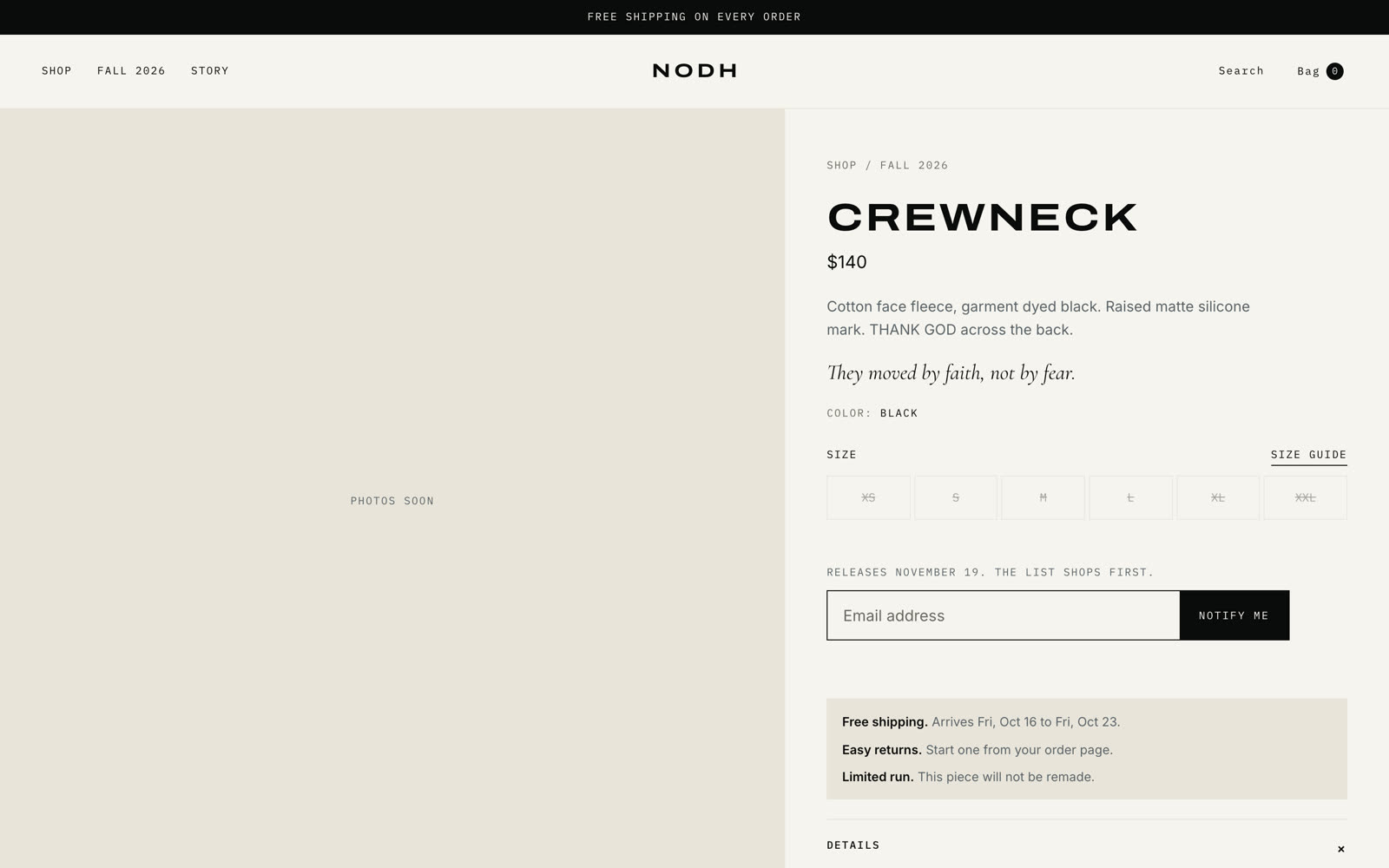
One page.
Card through Square.
Contact, shipping and payment on one page, with the delivery window calculated up front and discounts checked on the server. Card details go straight to Square and never touch NODH's servers.
Was a funnel's checkout step → now the brand's own checkout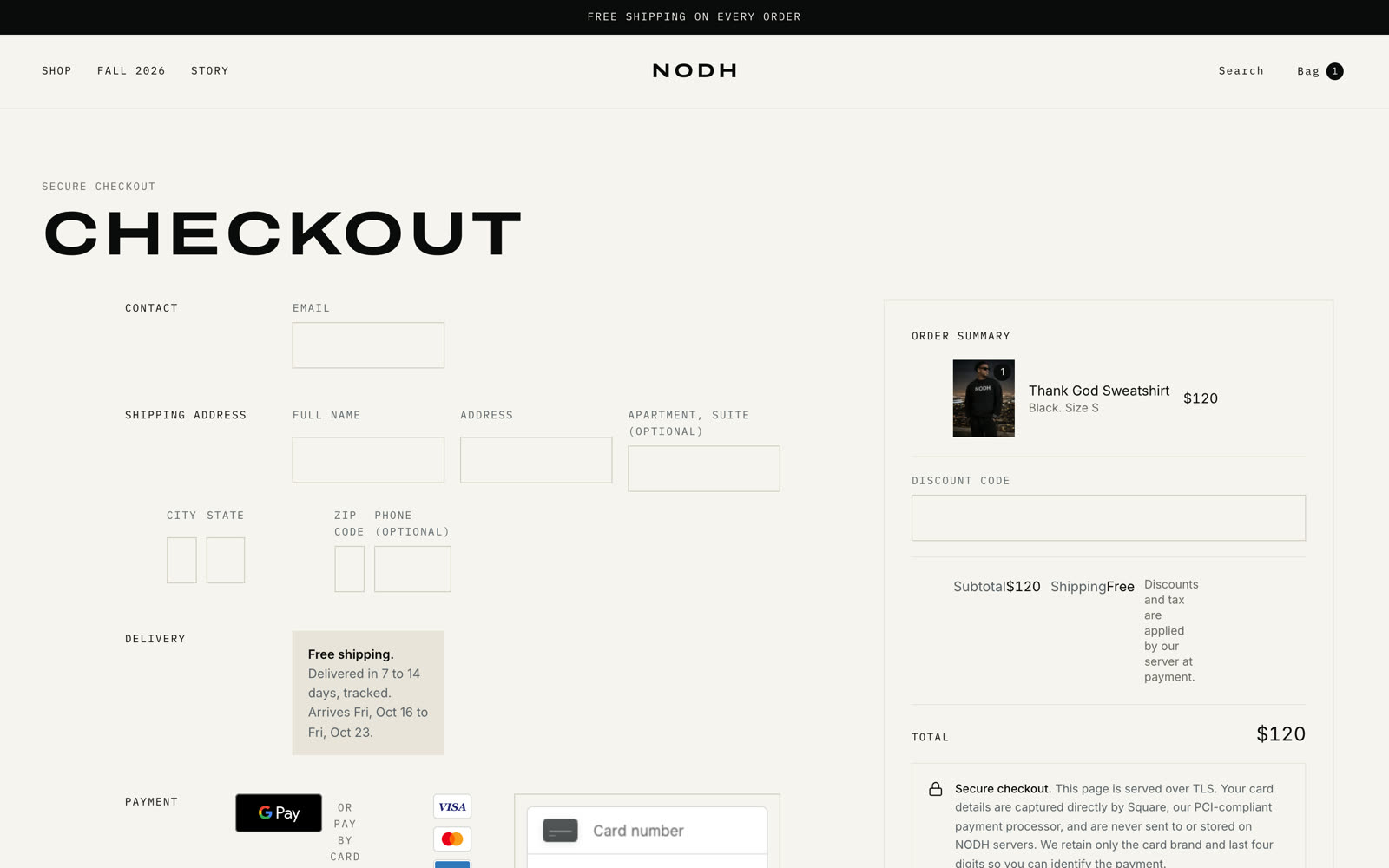
Track it. Return it.
No account needed.
An order number and the email used at checkout pull up the order, its tracking and a button to start a return or exchange. Exchanges are only offered while that size is still in the run.
Was "email us about your order" → now self-serve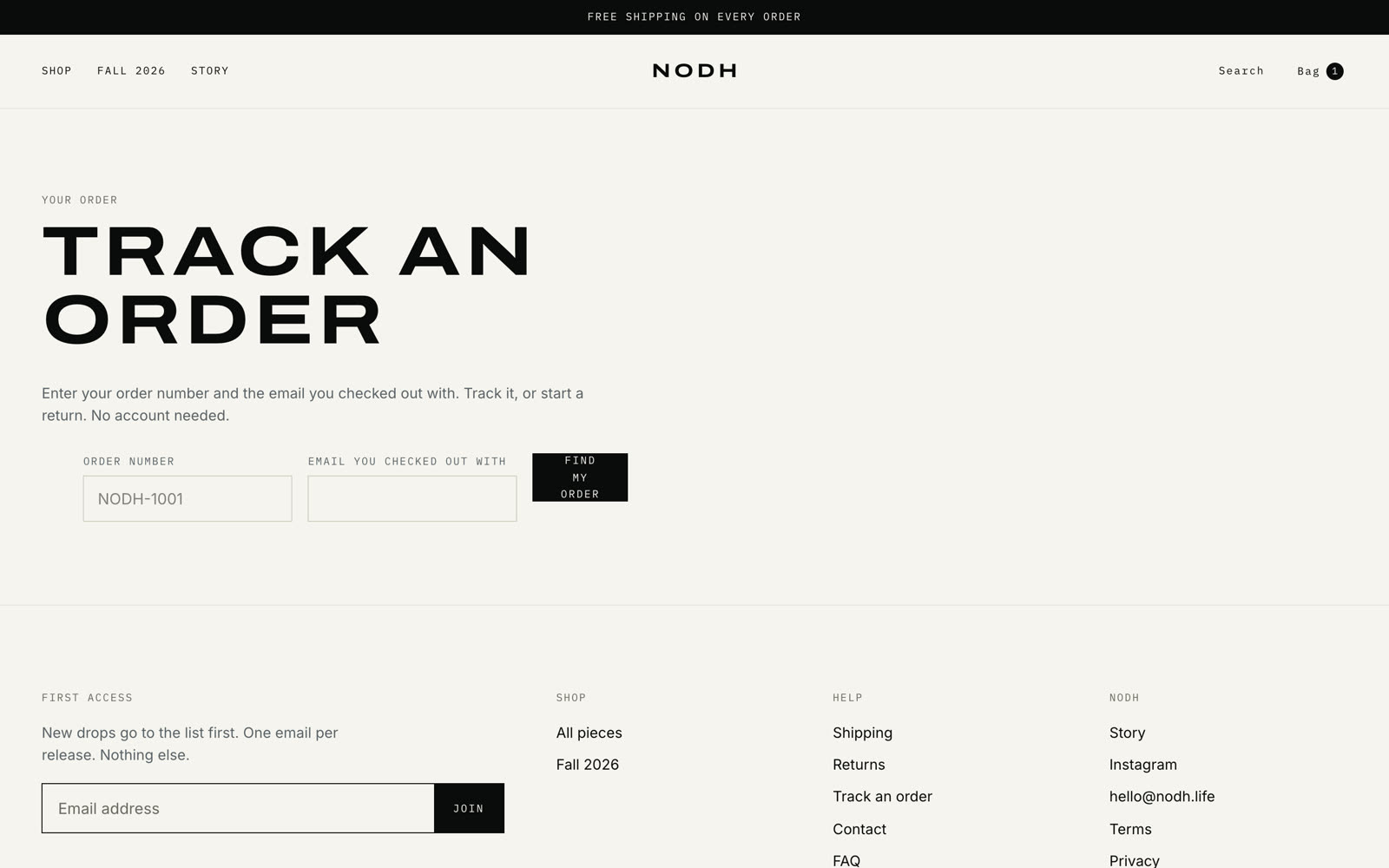
Where the audience
actually shops.
NODH's customers come from Instagram and TikTok on a phone. The store, the bag and checkout are built for one hand first.
Was a desktop page squeezed down → now phone-first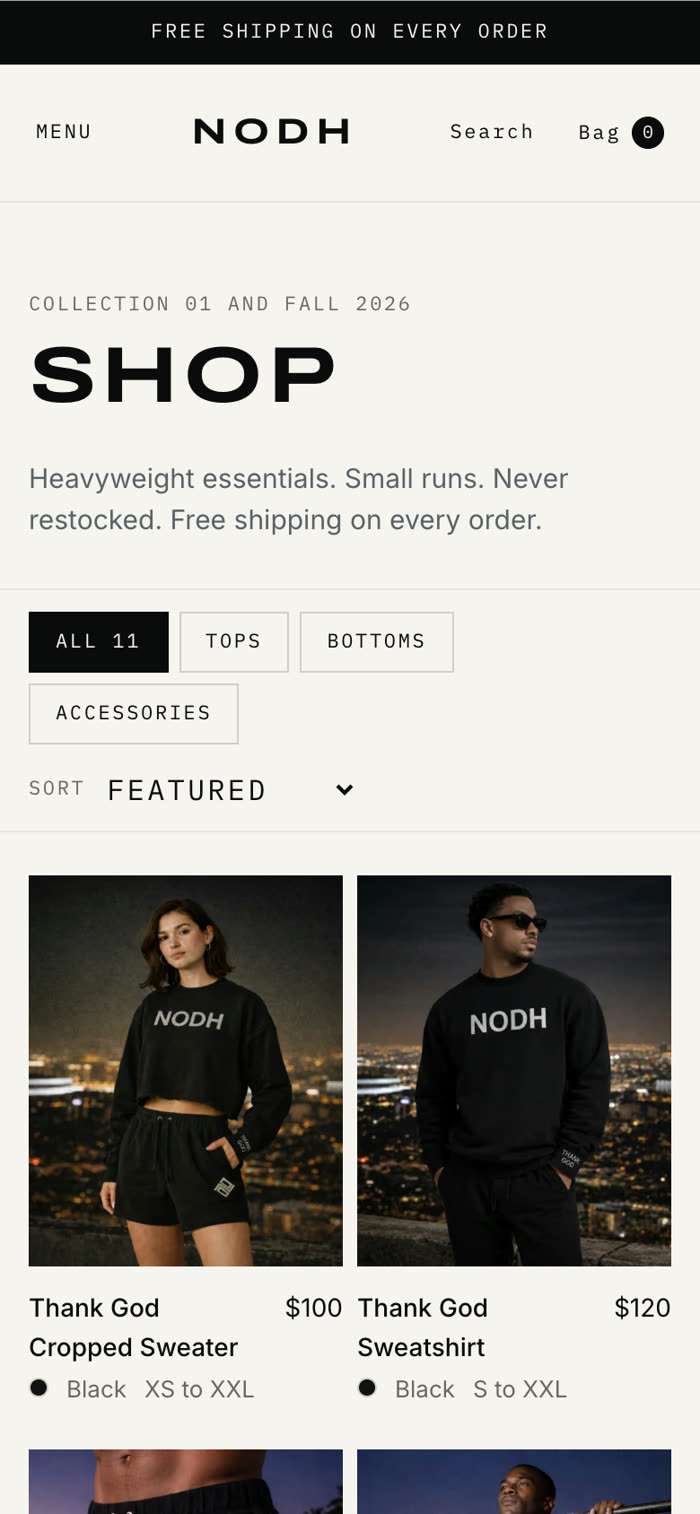
A back office built
around the run.
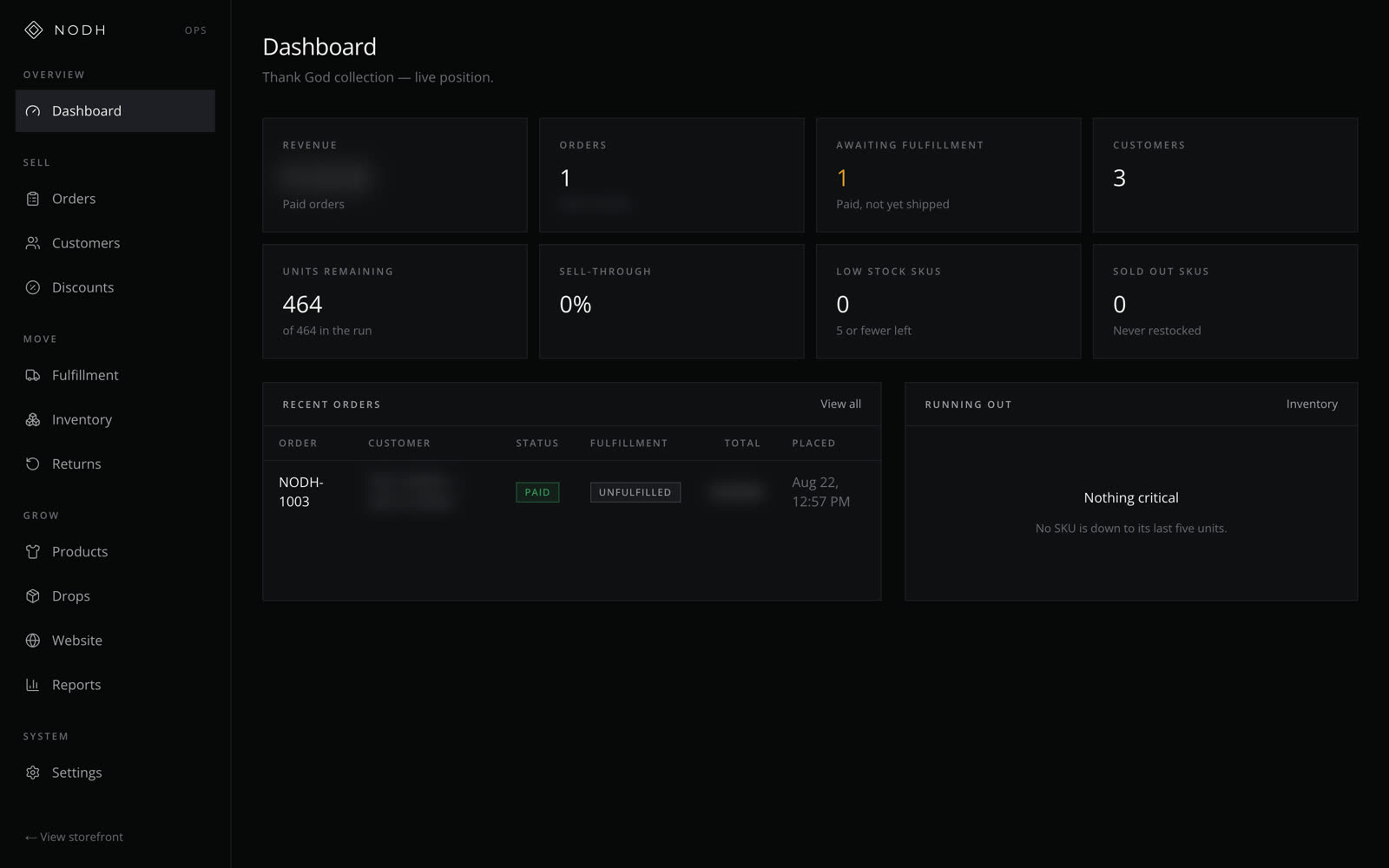
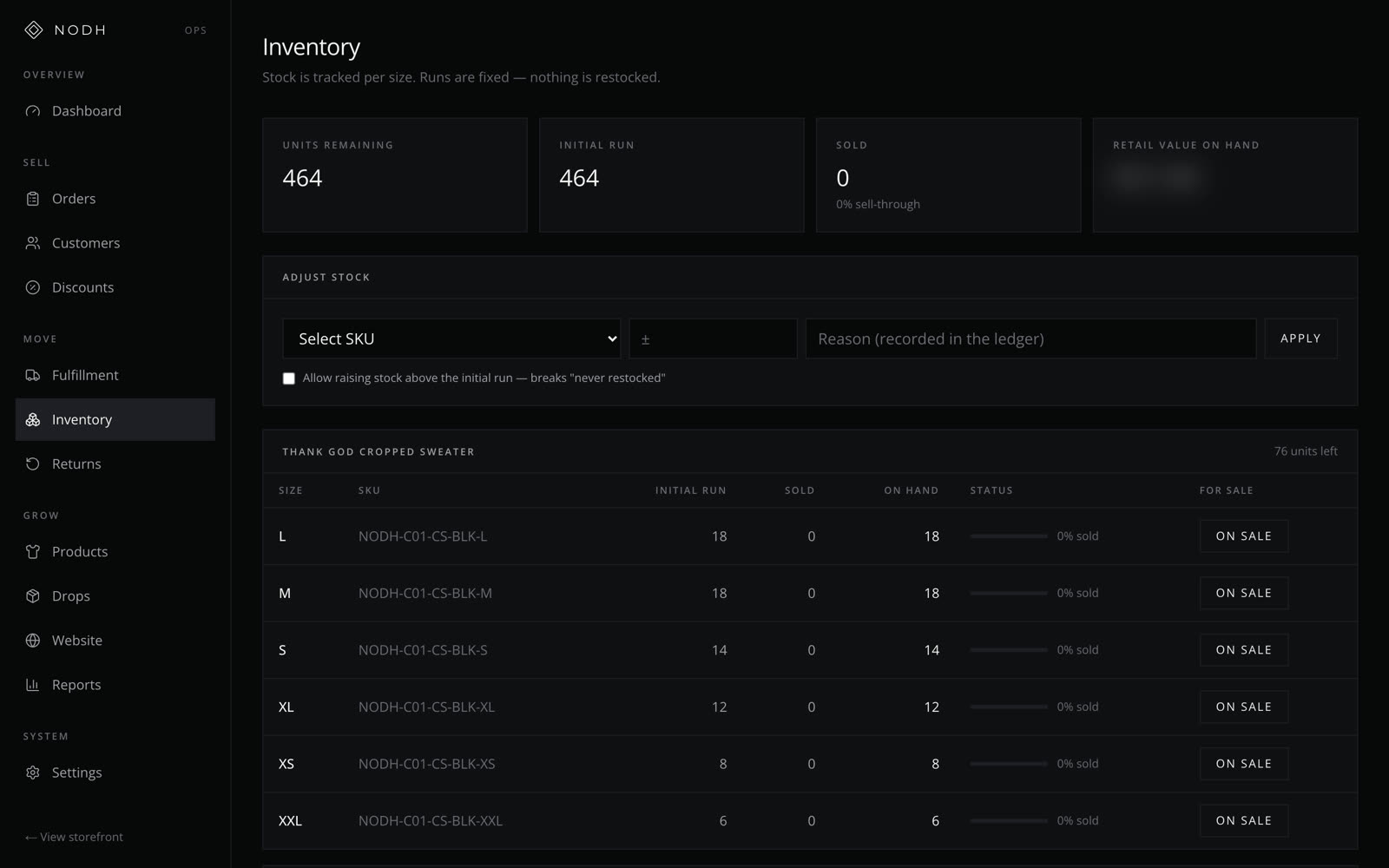
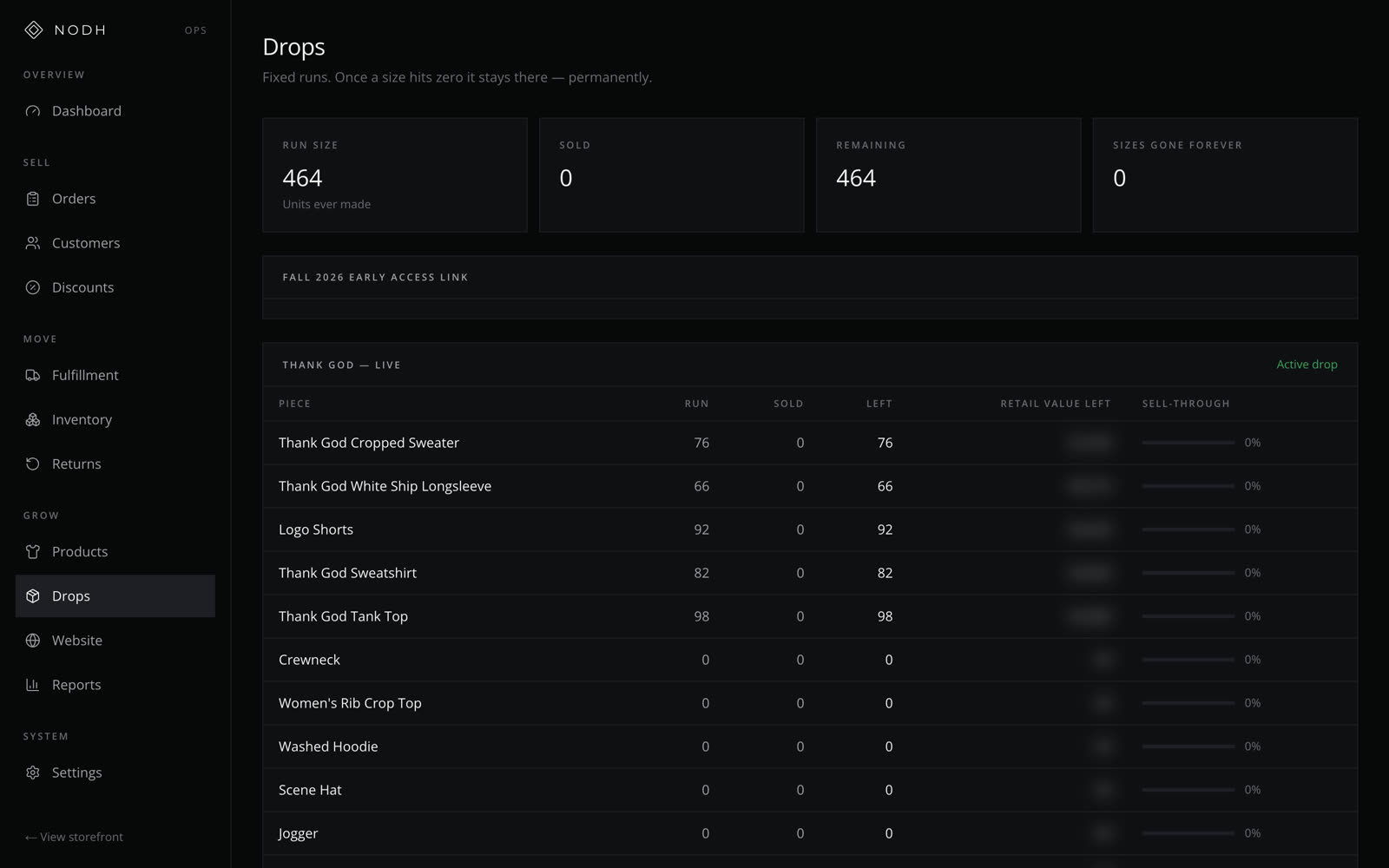
Orders, customers, products and the size matrix, inventory with a ledger behind every adjustment, drops with sell-through per piece, returns, discounts, reports and first-party traffic analytics. It is one console, built for a brand that sells in runs.
Everything a drop
needs to run.
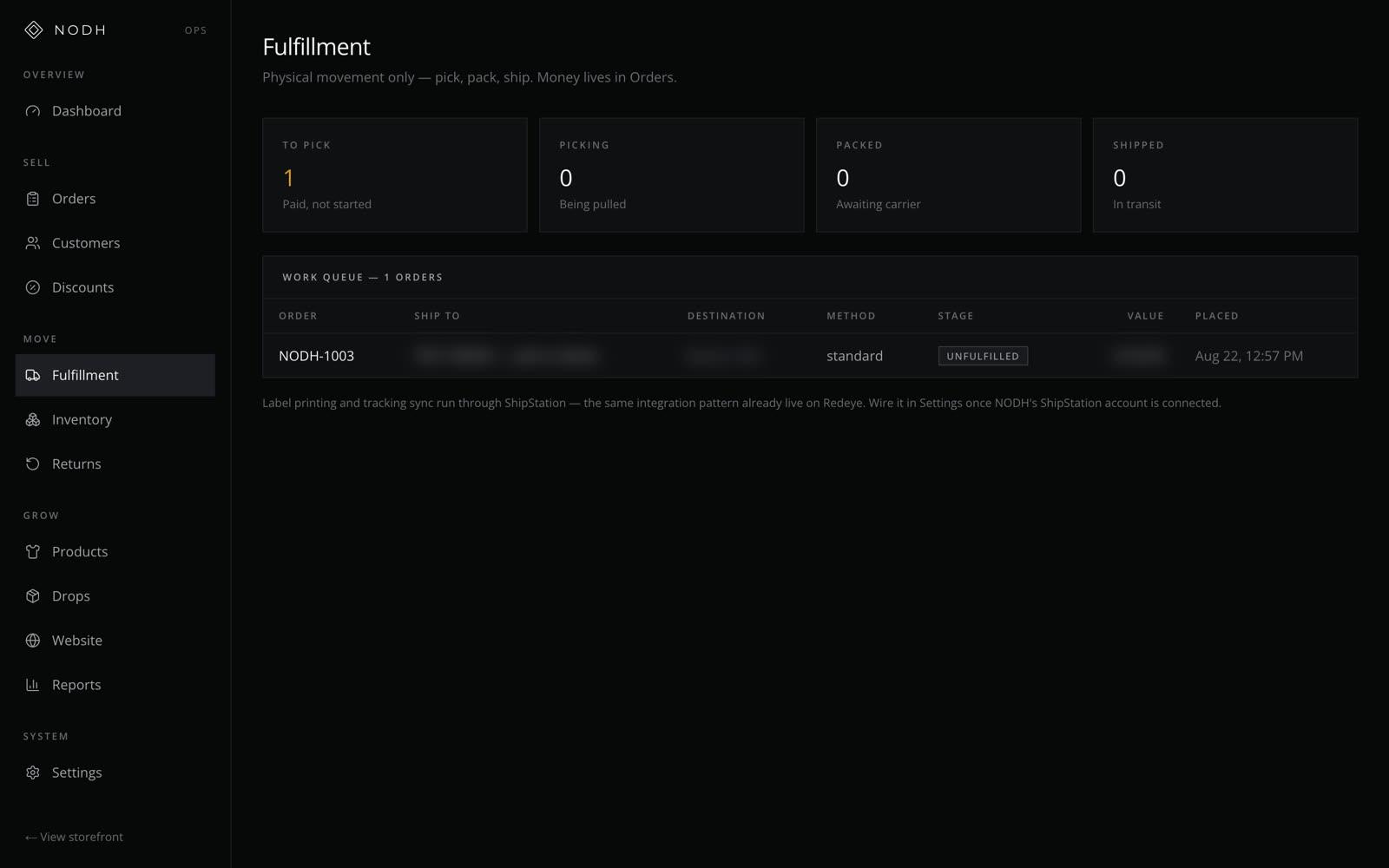
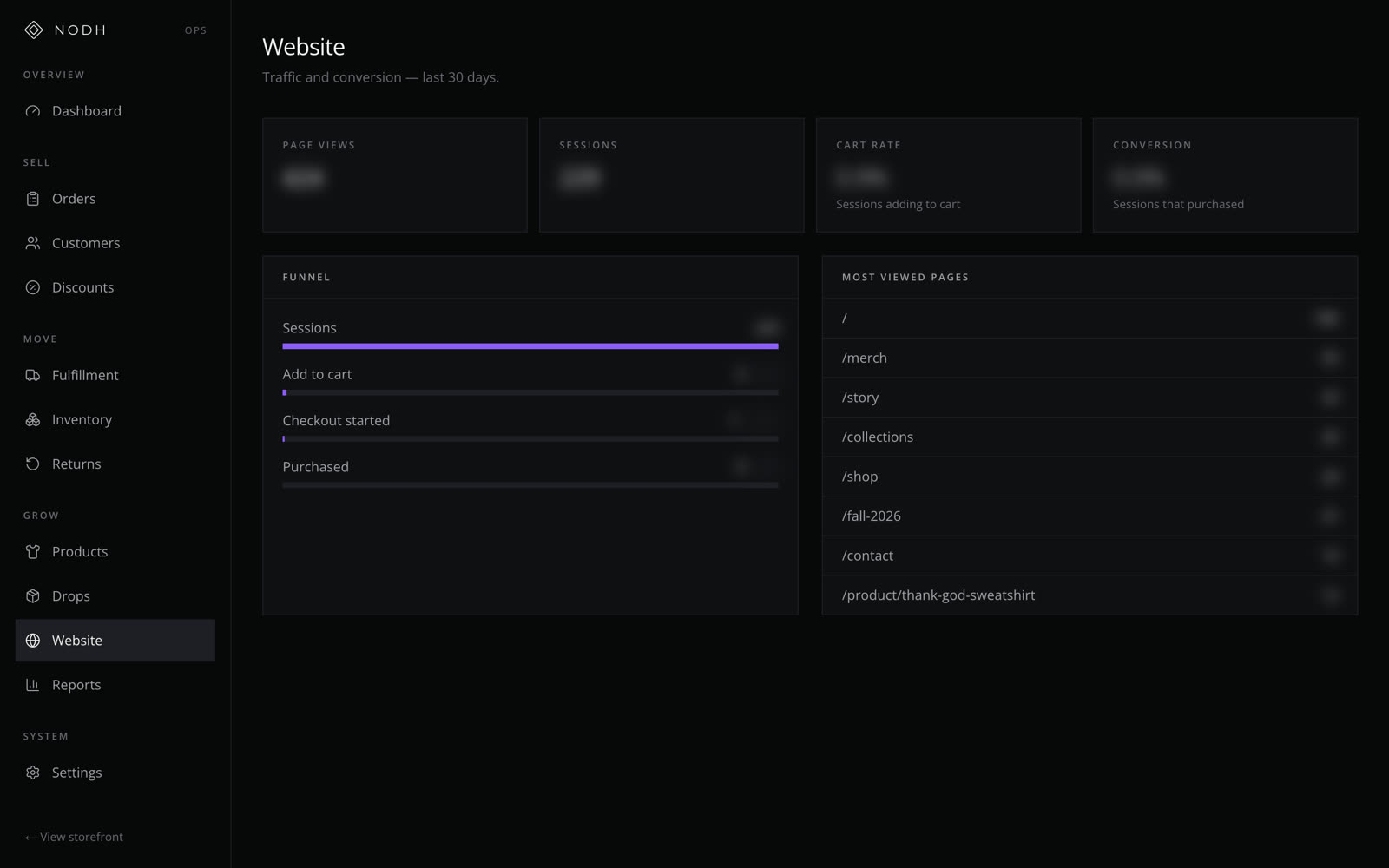
Products, inventory, drops, fulfillment, reports and website analytics.
Every size,
every unit.
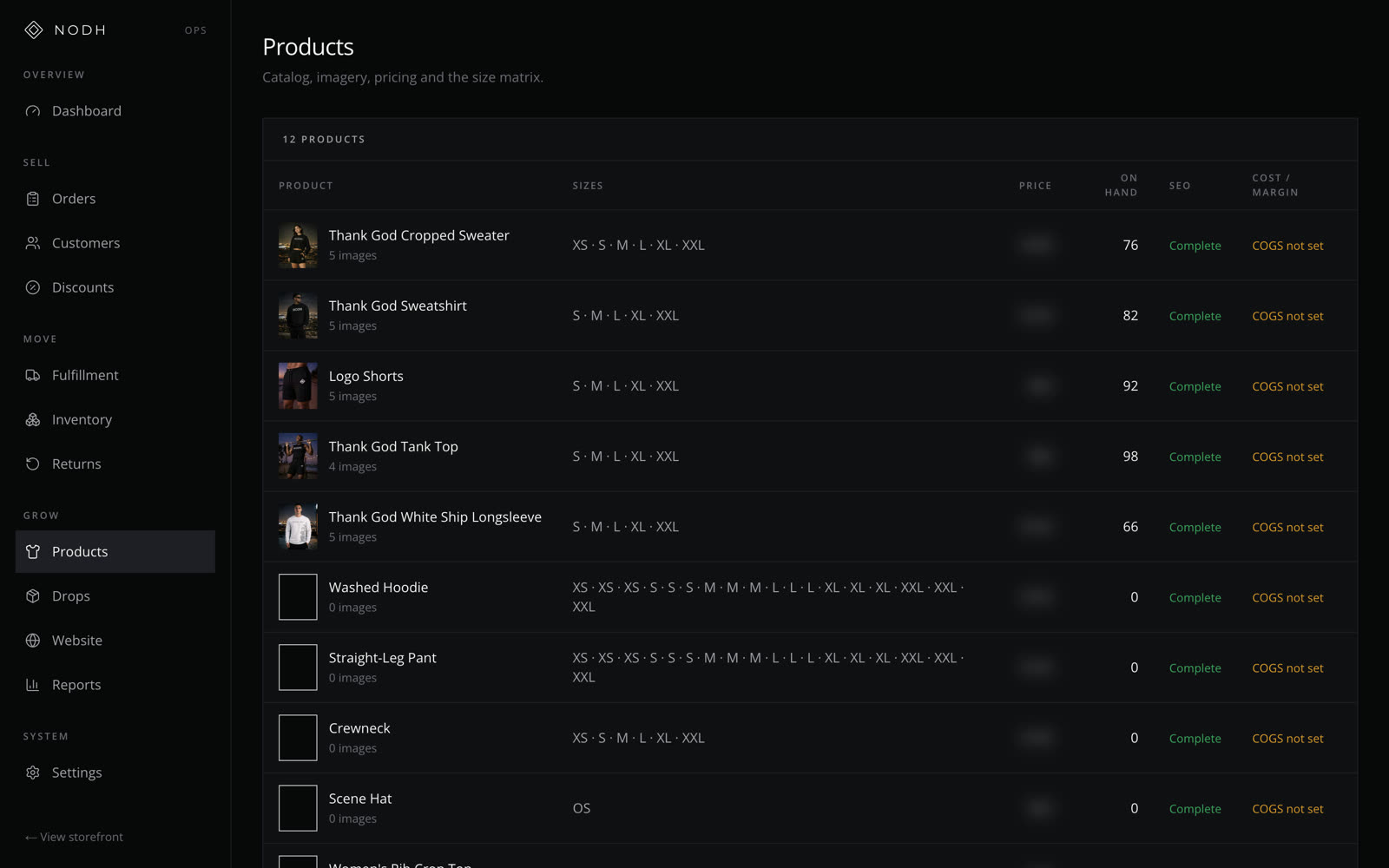
Inventory is tracked per size and SKU against the initial run, and every manual adjustment is written to a ledger with a reason. The drops view shows each piece's run, units sold, what's left and sell-through, so the team knows what's moving before it sells out.
Was a spreadsheet of counts → now a ledger per sizeA separate door
for whoever packs.
Fulfillment gets its own login and its own screens: to pack, packed, shipped, and a search by order number. It shows the oldest order first and flags anything that has been waiting too long. It is built for a phone at the packing table, and it can't see revenue or settings.
Was sharing the admin login with the packer → now a fulfillment-only portal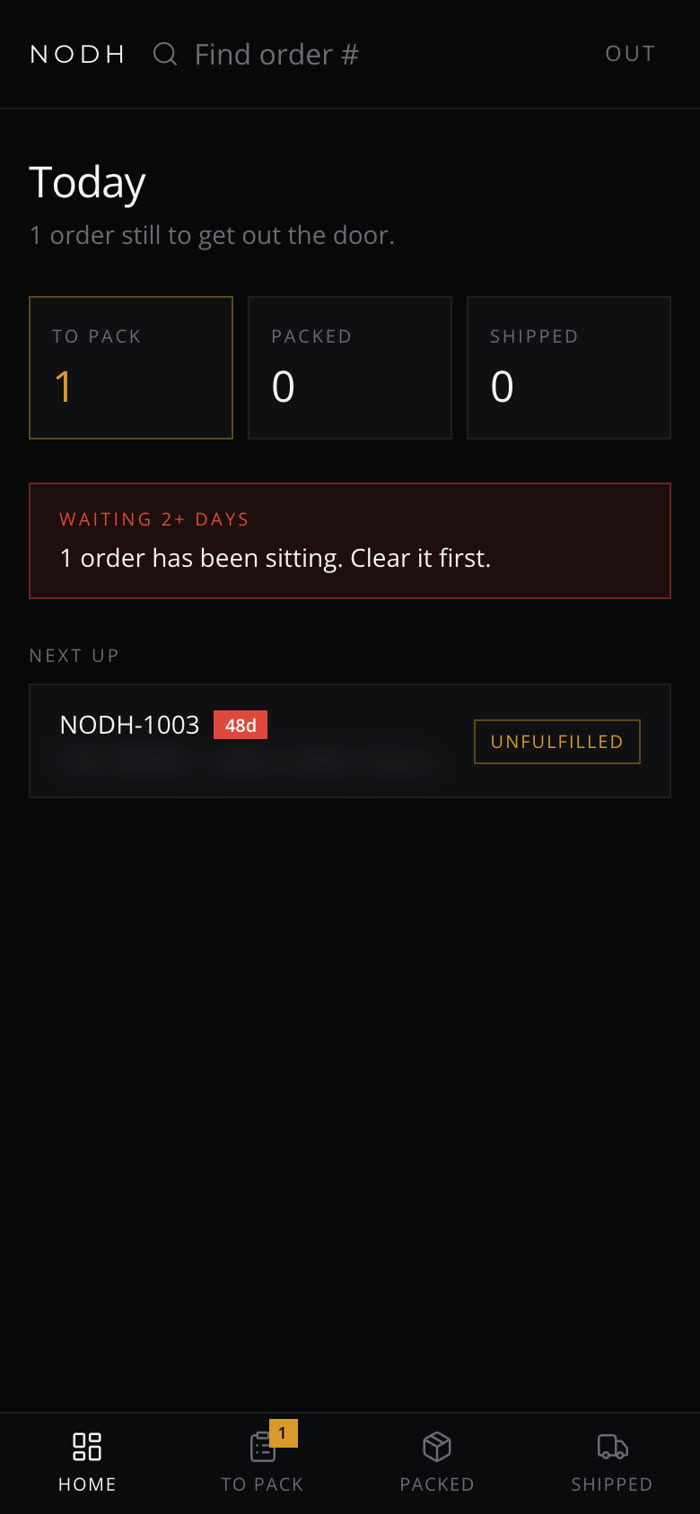
Run economics
and real traffic.
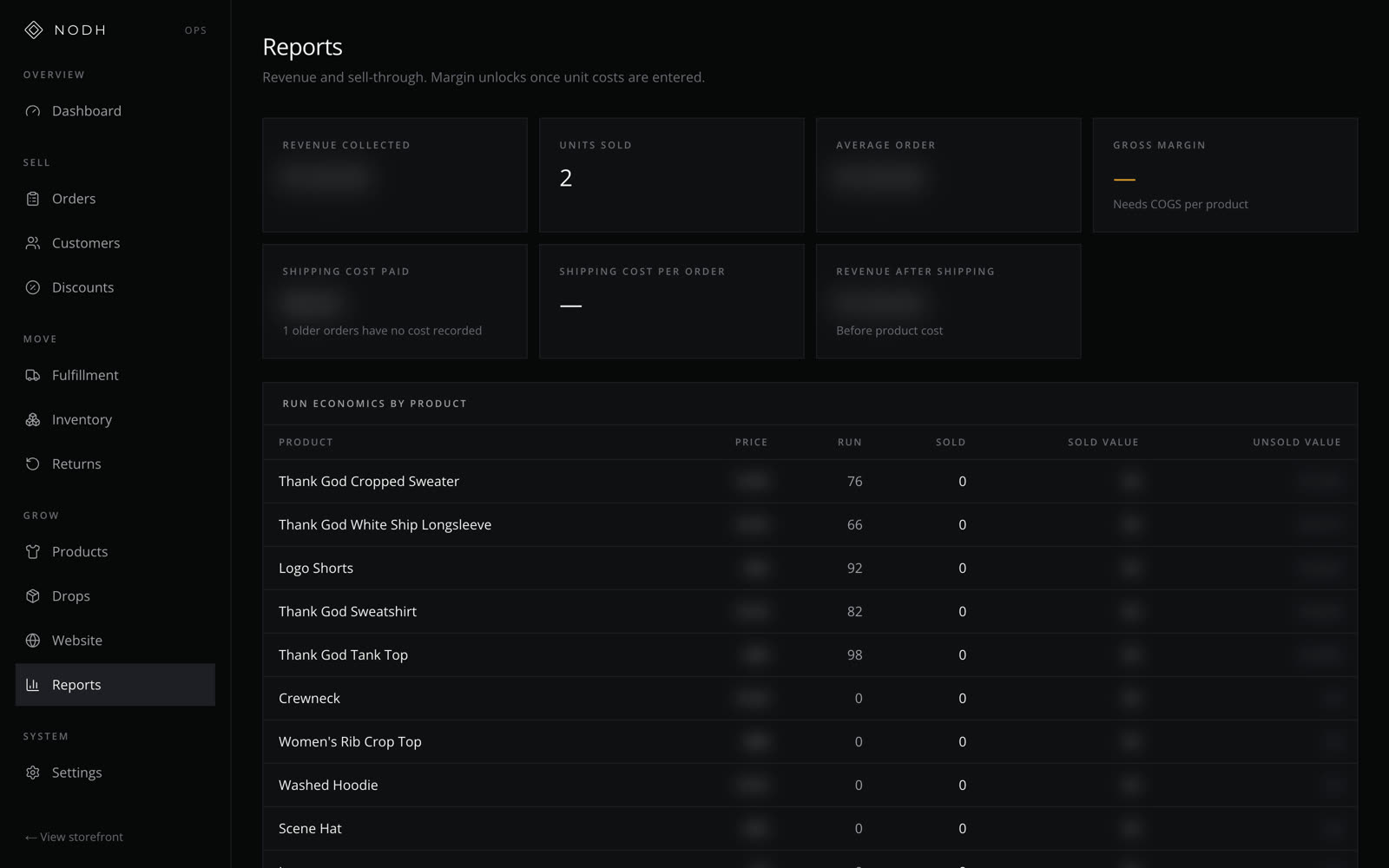
Reports break each piece down by price, run, units sold and the value still on the shelf, with margin once costs are entered. The website view counts visits, the add-to-cart and checkout funnel, and the most viewed pages, using first-party analytics with no third-party cookies.
Was guessing from a funnel's dashboard → now numbers the brand ownsCRM kept
the countdown ends
can't oversell
packing portal
Selling in drops
from a funnel?
Walk us through how a release works today and where it breaks. We'll show you what your own store should do.
Book a Process Automation Audit Every screen above is the real product. Founder-engineered by ParaWav AI · Not a template. Not duct-tape.